
Chindian Food in Singapore: A Connoisseur’s Guide to the Ultimate Flavour Fusion

Updated: Apr 16
What if the most electrifying meal you've ever tasted wasn't found in a traditional recipe book, but in the fiery collision of two ancient culinary giants? You've likely felt the frustration of searching for Halal-certified fusion food that actually delivers on its promise of heat, or perhaps you're simply bored with the predictable menus served at corporate events. It's a common sentiment among those who crave authenticity but struggle to find that perfect balance of sizzling wok-hei and rich Indian spices.
In this guide, I'll share my insights into the aromatic profiles and hand-crafted techniques that make this cuisine so special, ensuring you know exactly what to look for on a menu. We'll explore the history of these bold flavours and provide a curated list of signature dishes you must try. From the heritage of Hakka traditions to the modern zest of Schezwan spices, you'll discover why Copper Chimney has been a trusted custodian of chindian food singapore since 2012, offering an award-winning experience that bridges cultures with every bite.
Key Takeaways
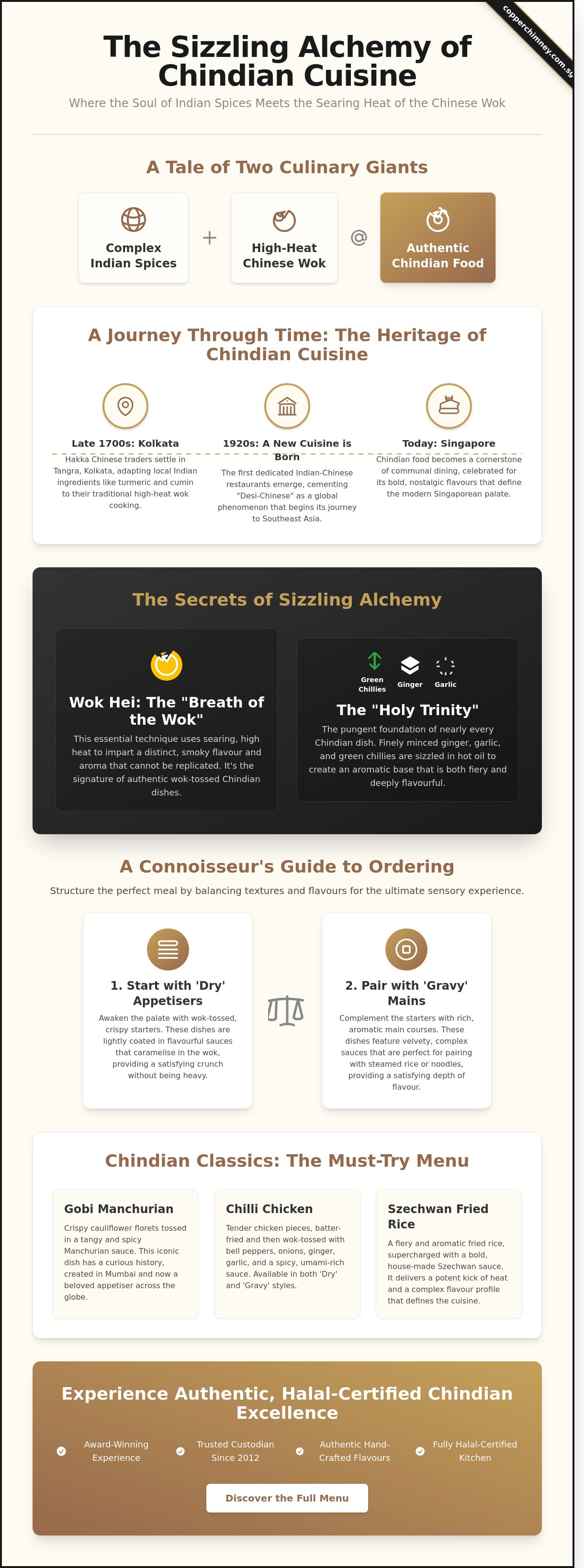
Trace the fascinating heritage of this fusion back to the Hakka Chinese community in Kolkata and understand its sophisticated evolution.
Uncover the secrets of "Wok Hei" and how the aromatic "Holy Trinity" of ginger, garlic, and green chillies creates a unique sensory profile.
Discover the essential must-try dishes of chindian food in Singapore, including the curious history behind the iconic Manchurian style.
Learn the connoisseur’s secret to structuring a perfect meal by balancing "Dry" appetisers with rich "Gravy" main courses for maximum flavour.
Identify where to experience authentic, Halal-certified Chindian excellence that brings a sense of nostalgia and prestige to the Singaporean dining scene.
Table of Contents What is Chindian Food? The Tale of Two Ancient Culinary Traditions The Sizzling Alchemy: How Indian Spices Met the Chinese Wok From Gobi Manchurian to Szechwan Rice: The Must-Try Chindian Classics A Connoisseur’s Guide to Ordering and Dining Experience Authentic Halal Chindian Excellence at Copper Chimney
What is Chindian Food? The Tale of Two Ancient Culinary Traditions
Chindian food is a culinary masterpiece that dances between two worlds. It isn't just a simple mix of ingredients; it's a sophisticated fusion where the searing heat of a Chinese wok meets the complex, aromatic soul of Indian spices. When you sit down to a plate of sizzling Chilli Chicken or Schezwan Fried Rice, you're tasting a history that spans centuries and continents. This unique flavour profile has found a permanent home in our local dining scene, making chindian food in Singapore a must-try for any serious epicurean looking for bold, hand-crafted meals.
The magic lies in the balance of techniques. Imagine the smoky breath of the wok, known as wok hei, infused with the pungent kick of ginger, garlic, and fresh green chillies. It's a bold, unapologetic style of cooking that transforms familiar textures into something entirely new. To better understand how these cultures blend in a local kitchen, watch this helpful video:
The Origins in Tangra: Where it All Began
The story starts in the late 1700s with the migration of Chinese silk traders and leather tanners to the bustling ports of India. These settlers, primarily from the Hakka community, established a vibrant enclave in the Tangra district of Kolkata. As they integrated into the local landscape, their culinary habits underwent a fascinating transformation. They began adapting local Indian ingredients, such as pungent turmeric and earthy cumin, to the high-heat environment of the traditional wok. This evolution wasn't just about survival; it was about creating a new language of flavour. By the 1920s, the first dedicated Indian-Chinese restaurants began to emerge, turning "Desi-Chinese" into a global phenomenon that eventually found a passionate audience in Southeast Asia.
Why Chindian Food is Unique to the Singaporean Experience
Singapore's identity is built on the seamless blending of different heritages, which makes the local love for this fusion quite logical. Our city's diners are always searching for high-quality halal indian food singapore that pushes boundaries while remaining rooted in tradition. Chindian cuisine fills this niche perfectly, offering a nostalgic yet exciting alternative to standard fare. It has become a cornerstone of communal dining, often serving as the centrepiece for large family gatherings where variety is key. The transition from humble street-side stalls to the award-winning excellence found at Copper Chimney shows just how much we value this craft. Since opening our doors, we've seen chindian food singapore grow from a niche craving into a celebrated culinary category that defines the modern Singaporean palate.
The Sizzling Alchemy: How Indian Spices Met the Chinese Wok
The kitchen at Copper Chimney transforms into a stage where fire and spice perform a rhythmic, high-heat dance. The roar of high-pressure burners provides the soundtrack for an experience that is both intensely familiar and wonderfully exotic. Unlike the delicate, often minimalist approach of traditional Chinese cuisine, chindian food singapore is a bold, unapologetic celebration of robust flavours. It's where the searing heat of the wok meets the soulful depth of Indian masalas, creating a sensory profile that has captivated local palates for decades. This fusion isn't just about heat; it's a sophisticated marriage of two ancient culinary philosophies that prioritises aromatic intensity.
At the heart of this alchemy lies the "Holy Trinity" of ingredients: ginger, garlic, and fresh green chillies. These elements are treated with a specific intensity, often minced to a fine paste or sliced into slivers that caramelise instantly against the hot steel. This foundation provides a pungent kick that traditional Chinese dishes rarely seek. The result is a dish that carries the DNA of a stir-fry but possesses the heart of a curry, balanced by the presence of hand-crafted sauces that bridge the two worlds. Every sizzle in the pan represents a moment where heritage meets innovation.
The Secret is in the Sauce
The transformation begins with the liquids. While dark soy sauce and sharp vinegar offer the necessary umami and acidity, they're reimagined through an Indian lens. Our chefs infuse these bases with toasted coriander and a signature blend of garam masala, adding a warmth that defines the Chindian experience. This creates the perfect medium for different textures. You might opt for a "Dry" preparation where the sauce clings to the protein like a spicy glaze, or a "Gravy" version that invites you to soak up the richness with a side of steamed rice. The inclusion of Szechwan peppercorns adds a subtle, numbing vibration that elevates the dish beyond a simple stir-fry.
Techniques of a Master Chindian Chef
Execution requires a master's touch. The process involves flash-frying at temperatures exceeding 200 degrees Celsius to maintain the vibrant crunch of vegetables while the protein remains tender. A critical, uniquely Indian step is the tempering of spices in hot oil, which releases essential oils before the wok is even loaded. Wok Hei is the breath of the wok that imparts a smoky charred flavour to every dish. This elusive quality is what separates a standard meal from an award-winning one. If you're eager to taste this craftsmanship, you can explore our menu at our various Singapore locations to find your nearest table.
From Gobi Manchurian to Szechwan Rice: The Must-Try Chindian Classics
To truly understand the allure of chindian food singapore, one must start with the paradox of the Manchurian dish. Despite its name, this culinary technique doesn't exist in traditional Chinese provinces. It was birthed in the 1970s in Mumbai's Chinatown, where chefs first experimented by sautéing ginger, garlic, and chillies with soy sauce and cornstarch to suit the Indian palate. This technique has since become a cornerstone of the fusion experience, offering a deep, umami-rich profile that bridges two massive culinary worlds. At Copper Chimney, we've refined these recipes since 2012 to ensure every plate carries the weight of this heritage while appealing to the sophisticated Singaporean palate.
The Iconic Starters: Gobi Manchurian and Chilli Chicken
The journey often begins with Gobi Manchurian, a dish that transforms humble cauliflower florets into crispy, golden-brown jewels. Each bite offers a satisfying crunch followed by a burst of tangy, spicy gravy that clings to the vegetable perfectly. For those who prefer poultry, the chilli chicken stands as the ultimate comfort food. It's a masterclass in balance; the heat of green chillies meets the sweetness of bell peppers in a glossy, dark sauce. These dishes serve as the perfect introduction for beginners because they encapsulate the "sweet-sour-spicy" trifecta that defines the genre. Because our kitchen is Halal-certified, these starters are inclusive favourites that bring diverse groups together over shared plates of sizzling goodness.
Mains: Szechwan Fried Rice and Hakka Noodles
When it's time for the main course, the Szechwan fried rice is a non-negotiable choice for spice enthusiasts. Unlike the numbing heat of traditional Sichuan peppercorns, the Chindian version relies on a vibrant, house-made red chilli paste that infuses every grain of rice with a fiery complexity. If you're looking for something slightly more restrained, Hakka noodles provide a silky, aromatic alternative. These noodles are wok-tossed with finely julienned vegetables, offering a subtle smoky "wok hei" that pairs beautifully with rich, saucy gravies.
A connoisseur knows that the secret lies in the pairing. We recommend these combinations for a complete meal:
Pairing Szechwan rice with a side of Veg Manchurian gravy to cut through the heat with earthy notes.
Combining Hakka noodles with Chilli Paneer for a vegetarian delight that offers contrasting textures.
Opting for "Triple Schezwan" which combines rice, noodles, and a fried egg for the ultimate indulgence in one bowl.
This variety ensures that every visit to a specialist in chindian food singapore offers a new discovery. Whether you're craving the crunch of a dry starter or the warmth of a spicy gravy, the protein options ranging from chicken to paneer and fish ensure there's a dish for every dietary preference. The result is a dining experience that feels both familiar and thrillingly original.
A Connoisseur’s Guide to Ordering and Dining
To truly appreciate chindian food singapore, one must understand the delicate choreography of the meal. A seasoned diner knows that the sequence of dishes dictates the entire experience. It's best to begin with 'Dry' dishes; these are wok-tossed wonders like Szechuan Paneer or Crispy Corn that act as the perfect appetisers. They offer a concentrated burst of spice and crunch that prepares the palate for the heavier courses that follow. Since Copper Chimney established its presence in the local food scene in 2012, we've observed that the most satisfied guests are those who treat the meal as a gradual build-up of intensity.
The transition to 'Gravy' dishes marks the heart of the feast. These saucy masterpieces are designed to be mopped up with traditional North Indian breads rather than just rice. While steamed Basmati is a classic choice, pairing a spicy Chilli Chicken gravy with a buttery, charred Garlic Naan creates a texture profile that's hard to beat. You'll know you've found authentic Chindian when you hit that 'holy trinity' of flavours: the deep umami of soy, the sharp kick of green chillies, and the bright acidity of vinegar. It's a balance that requires a master's touch to prevent one element from overpowering the others.
Balancing the Heat
Spice is central to the Chindian experience, but it shouldn't be overwhelming. Don't be afraid to ask for your 'Schezwan' level to be adjusted; a true chef respects the balance between heat and flavour. To manage the fire, always include cooling companions. A bowl of chilled Raita or a fizzy Fresh Lime Soda provides the necessary reset between bites. When dining in Singapore, ordering for a group is best done family-style. This allows everyone to sample the diversity of the menu, from the smoky tandoor starters to the fiery wok-fried mains, ensuring a communal journey through these bold heritage flavours.
Chindian for Special Occasions
The versatile nature of this cuisine makes it a standout choice for Halal catering services in Singapore. Whether it's a wedding or a milestone birthday, these bold flavours cater to a diverse crowd that appreciates a spicy kick. For the corporate world, customising bento boxes with Chindian favourites is a proven way to liven up a boardroom lunch. If you're looking to elevate your next gathering, you can plan your next event with our specialised catering team to ensure every guest leaves satisfied. Our experience with large-scale events ensures that the food arrives with the same 'wok-hei' essence you'd find in our restaurant.
Ready to experience these flavours firsthand?
to enjoy a masterclass in fusion dining.
Experience Authentic Halal Chindian Excellence at Copper Chimney
Copper Chimney stands as the dedicated custodian of the Chindian tradition in Singapore, acting as a bridge between the historic streets of Kolkata and our local vibrant food scene. We've spent over 12 years perfecting the delicate balance between the bold, pungent notes of Chinese wok cooking and the complex, earthy spices of North Indian cuisine. Our 100% Halal certification is a vital pillar of our identity, ensuring we provide an inclusive dining experience where every guest feels welcome. It's about more than just dietary compliance; it's about bringing the diverse Singaporean community together over a shared love for hand-crafted excellence and authentic heritage.
The "sizzling alchemy" we create in our kitchens is a tribute to the migrant history that birthed this unique fusion. Every dish is a result of meticulous craft, from the way our chefs toss the Hakka noodles to the precise blend of our signature Schezwan sauce. We don't rely on mass-produced bases; instead, we prioritise aromatic, fresh ingredients that trigger an immediate sensory response. If you're searching for the most authentic chindian food in Singapore, you'll find that our kitchen captures that fiery spirit with every toss of the pan, delivering a meal that is both professional and deeply personal.
Our Award-Winning Legacy
Since opening our first doors in 2012, we've been a consistent name in the local landscape, honoured with multiple accolades that celebrate our commitment to quality. Our dining rooms offer a sophisticated yet welcoming atmosphere, designed to evoke the warmth of traditional hospitality. You can experience this decade-long heritage by visiting any of our Copper Chimney locations across the island, where the history of the food is as important as the service itself.
Your Invitation to the Table
We invite you to experience this journey of flavour in a way that suits your lifestyle. You can easily order Chindian food online for a cosy night in, or soak up the theatre of our kitchen by making a reservation at Syed Alwi. Chindian food is a sensory experience that stays with you long after the final bite. It represents the very best of chindian food singapore, and we're ready to welcome you to our table.
Embark on Your Chindian Flavour Adventure
The journey from the historic streets of Kolkata to the vibrant heart of Singapore reveals a culinary marriage that's as bold as it's delicious. You've explored how the fiery heat of Indian spices finds its perfect match in the high-heat breath of the Chinese wok, creating a unique sizzle that defines the palate. This isn't just about food; it's about a legacy of craft that Copper Chimney has curated with passion for over 14 years. As a MUIS Halal-certified and award-winning destination, we're proud to be the definitive home for chindian food singapore enthusiasts who seek authenticity in every bite.
Whether you're craving the iconic crunch of Gobi Manchurian or the aromatic depth of Szechwan rice, our kitchen serves as a bridge between these two ancient traditions. Every dish is hand-crafted to ensure the warmth of Indian hospitality meets the precision of Chinese technique. Book your table at Copper Chimney and experience the best Chindian fusion in Singapore to discover why we've remained a local favourite for over a decade. We look forward to welcoming you for a truly unforgettable meal.
Frequently Asked Questions
What is Chindian food exactly?
Chindian food is the vibrant culinary marriage of Chinese cooking techniques and bold Indian spices. Originating from the Hakka community in Kolkata during the late 19th century; it's a unique fusion that has become a staple of chindian food singapore. You'll find classic stir-fry methods elevated by aromatic ingredients like ginger, garlic, and green chillies. It's a symphony of flavours that feels both nostalgic and excitingly new for every diner.
Is Chindian food in Singapore typically Halal-certified?
While not every outlet carries the certification; many leading establishments like Copper Chimney are 100 percent Halal-certified to serve Singapore's diverse community. This ensures that everyone can enjoy these aromatic dishes with complete peace of mind. In a 2023 survey of local diners; access to Halal-certified fusion food was cited as a top priority for 65 percent of respondents. We take pride in maintaining these high standards of inclusivity.
What are the most popular Chindian dishes to try first?
You should start your journey with iconic staples like Chicken Manchurian or Gobi Manchurian. These dishes feature golden fried florets or meat tossed in a tangy, spicy sauce that defines the genre. Schezwan Fried Rice is another essential; offering a fiery kick that differs from the milder Cantonese versions. For a vegetarian delight; Chilli Paneer provides a perfect balance of soft texture and sizzling heat that captures the heart of this cuisine.
How does Chindian food differ from traditional Chinese food?
Chindian food swaps traditional Chinese seasonings like five-spice for bold Indian aromatics such as cumin, coriander, and turmeric. While traditional Chinese cuisine often focuses on delicate balances; this fusion prioritises intense, pungent flavours and high-heat stir-frying. The use of fresh green chillies and onions is significantly higher here. It's a robust adaptation that caters to the spice-loving palates found across the Indian subcontinent and Singapore's food centres.
Is Chindian food very spicy?
Yes, Chindian cuisine is known for its signature heat; though most chefs can adjust the spice levels to suit your preference. The "Schezwan" style dishes are typically the spiciest on the menu; often featuring a heavy hand of dried red chillies and pungent garlic. If you prefer something milder; you might opt for Ginger Chicken or a classic Hakka Noodle. It's all about that tingling sensation that keeps you coming back for another bite.
Can I get Chindian food for corporate catering in Singapore?
Absolutely, Chindian food is a premier choice for corporate catering in Singapore due to its crowd-pleasing nature and Halal availability. Copper Chimney regularly provides tailored menus for office events; catering to groups ranging from 20 to over 500 guests. The robust flavours hold up exceptionally well in buffet settings; ensuring the food remains delicious from the first serving to the last. It's a sophisticated way to impress clients and reward teams.
What is the difference between "Dry" and "Gravy" Manchurian?
Dry Manchurian is served as a crisp appetiser with just enough sauce to coat the ingredients; while the Gravy version is a main course served in a thick, savoury sauce. You'd typically pair the Gravy variant with steamed rice or Hakka noodles to soak up those delicious juices. The Dry version is perfect for sharing as a starter; offering a satisfying crunch that highlights the hand-crafted quality of the fritters. Both versions use the same aromatic base.
Why is it called "Szechwan" in Chindian cuisine?
The term "Szechwan" in this context is a nostalgic nod to the Sichuan province; though the flavour profile has been adapted with Indian red chillies instead of Sichuan peppercorns. It represents a specific spicy sauce made from garlic, ginger, and soy that became a hallmark of the Kolkata fusion scene in 1975. While it lacks the numbing quality of traditional Sichuan food; it offers a sharp, vinegary heat that is a signature of chindian food singapore.


Comments