
The Sizzling Alchemy of Szechwan Fried Rice: A Connoisseur’s Guide to Singapore’s Chindian Soul

Updated: Apr 10
Why do we settle for a plate of rice that lacks a soul? In a city like Singapore, where the humidity clings to your skin like a second layer of silk, the only thing that should be more intense is the heat coming off a seasoned iron wok. If you've spent the last decade searching for a szechwan fried rice that actually bites back, you know the struggle of finding that elusive balance between fiery spice and the dry, smoky perfume of "wok hei".
It's a common frustration to order a fusion dish only to receive a damp, crimson mess that tastes more of sugar than of history. We're going to strip back the layers of this Chindian classic to understand the precise alchemy of Szechwan peppers and the high-heat techniques used by Copper Chimney since 2012. This guide reveals the essential ingredients of a proper sauce and shows you exactly where to find an award-winning, Halal-certified plate that honours the gritty, soulful traditions of Kolkata's streets right here in the heart of the Lion City.
Key Takeaways
Uncover the soulful, gritty evolution of Chindian cuisine, tracing its journey from the bustling backstreets of Kolkata to the high-heat woks of Singapore.
Master the anatomy of a perfect szechwan fried rice, where the violent breath of the wok meets a secret, red-stained alchemy of hand-crafted chutney.
Navigate the Chindian pantheon to understand why this fiery classic offers far more than just a vibrant colour change compared to its milder counterparts.
Acquire the connoisseur’s checklist to identify an authentic masterpiece, ensuring every grain is firm, separate, and perfectly kissed by oil.
Discover how Copper Chimney honours this heritage with Halal-certified excellence, blending sophisticated tradition with the raw, sizzling energy of the street.
Table of Contents The Soul of Chindian Cuisine: Why Szechwan Fried Rice is More Than Just Heat Anatomy of the Perfect Szechwan Fried Rice: From Wok Hei to the Secret Sauce Comparing the Classics: Szechwan Fried Rice vs. The Chindian Pantheon The Connoisseur’s Checklist: How to Spot an Authentic Masterpiece The Copper Chimney Experience: Where Tradition Meets the Sizzle
The Soul of Chindian Cuisine: Why Szechwan Fried Rice is More Than Just Heat
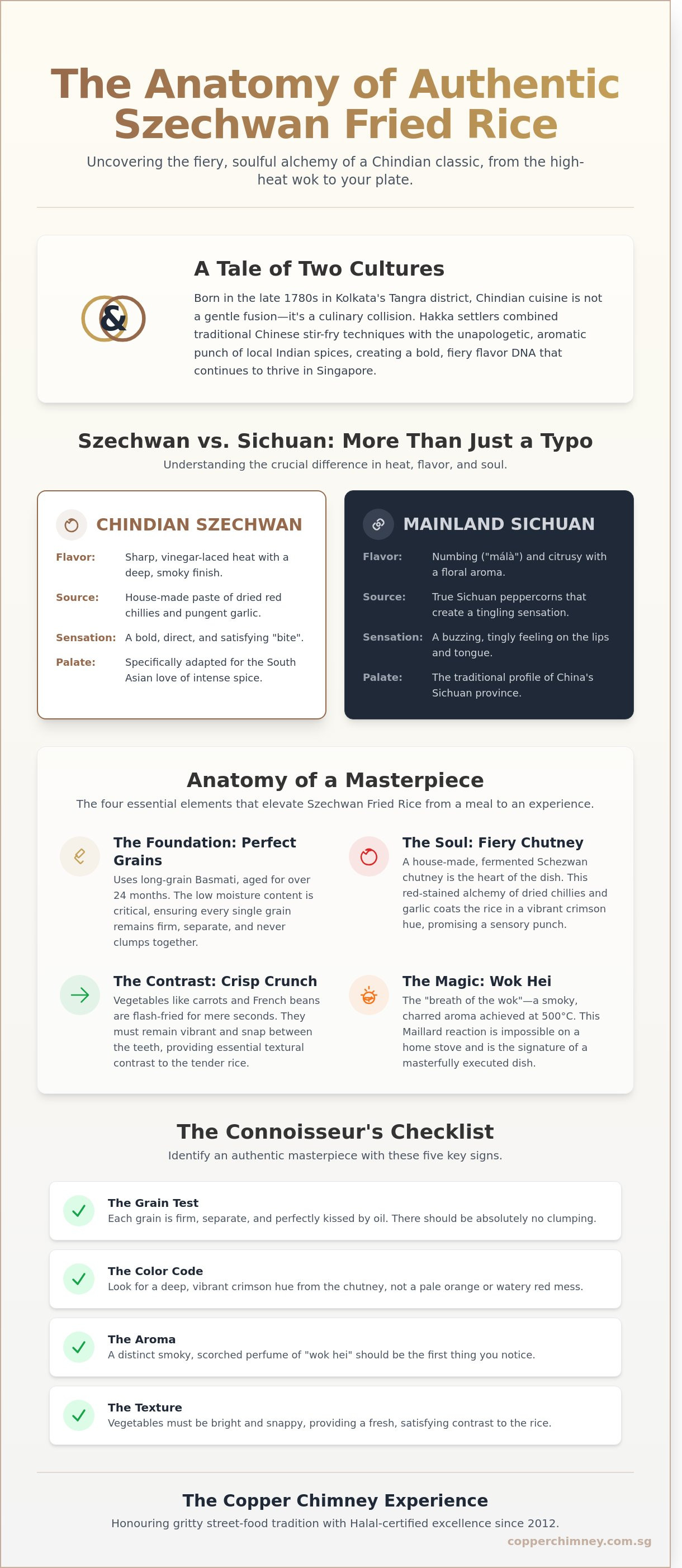
Walk down the rain-slicked streets of Kolkata's Tangra district and you'll find the heartbeat of a culinary revolution that began in the late 1780s. It's here that the first Hakka settlers traded their traditional recipes for local spices, creating a hybrid that's as unapologetic as a humid monsoon afternoon. Szechwan fried rice isn't just a menu item; it's the result of two ancient civilisations colliding in the intense, searing breath of a high-heat wok. While purists might point to the classic Sichuan fried rice from the mainland, the Chindian version we celebrate in Singapore has its own distinct, fiery DNA.
There's an emotional weight to this dish that transcends simple nutrition. It's the ultimate late-night companion, a bowl of grains that offers a comfort that bites back with every spoonful. In Singapore's fast-paced dining scene, this fusion has evolved from a niche curiosity into a cultural powerhouse. Whether you're at a bustling hawker centre or sitting down for an award-winning meal at Copper Chimney, the aroma of toasted chillies and garlic is a universal signal that a soul-satisfying experience is about to begin.
To better understand this concept, watch this helpful video:
The Collision of Two Culinary Giants
This isn't a polite handshake between cultures; it's a full-blooded embrace. The Indian diaspora took Chinese stir-fry techniques and injected them with a heavy dose of aromatic ginger and pungent chillies. In Singapore, this fusion is a permanent fixture. Establishments like Copper Chimney, which has been serving authentic, Halal-certified Chindian fare since 2012, have refined this street-food staple. It's a culinary bridge that connects the heritage of the Silk Road with the modern cravings of a global city.
The Szechwan vs. Sichuan Distinction
Don't expect the numbing, citrusy buzz of the Sichuan peppercorn here. The Chindian evolution prioritises a sharp, vinegar-laced heat and the smoky depth of dried red chillies. It's a profile specifically adapted for the South Asian palate, where the bite comes from a house-made paste rather than a tingly floral sensation. This version is bolder, redder, and arguably more addictive. It's why a S$15 plate of this rice feels like a luxury, even when you're chasing the dragon of a late-night craving. The szechwan fried rice we love is about the sizzle of the pan and the soul of the spices.
Anatomy of the Perfect Szechwan Fried Rice: From Wok Hei to the Secret Sauce
Great Szechwan fried rice isn't just a meal; it's a controlled riot inside a carbon steel pan. It's a dish that demands respect, born from the gritty, high-pressure kitchens of Kolkata and refined in the heart of the Lion City. To understand Singapore's Chindian soul, you have to look at the ingredients that survive the fire. It starts with the grain. We don't use just any rice. We insist on long-grain Basmati, aged for at least 24 months to ensure the moisture content is low enough to keep every kernel distinct. If the rice clumps, the dish is dead on arrival.
The soul of the plate lies in the red-stained alchemy of the house-made Schezwan chutney. This isn't the bottled stuff you find in a supermarket. It's a fermented, fiery concoction of dried red chillies, garlic, and Sichuan peppercorns that provides a numbing heat. When this hits the hot oil, it undergoes a transformation, coating the rice in a vibrant crimson hue that promises a punch to the senses. We pair this intensity with a specific crunch factor. Vegetables like carrots and French beans are flash-fried for mere seconds. They should be vibrant and snap between your teeth, providing a textural contrast to the tender, spice-soaked rice.
The Mystery of Wok Hei
You can't replicate the "breath of the wok" on a standard kitchen stove. Wok hei is a chemical romance that occurs at roughly 500 degrees Celsius. At this temperature, the rice undergoes the Maillard reaction, caramelising the exterior of each grain and imparting a scorched, smoky depth. A domestic burner, usually outputting around 2,000 to 3,000 watts, simply lacks the brute force required. In our professional kitchen, the flames lick the sides of the wok, flash-searing the ingredients and creating that elusive, charred aroma that defines a masterfully executed Szechwan fried rice.
The Holy Trinity of Aromatics
The backbone of this dish is built on a heavy-handed, almost aggressive use of garlic. It's finely minced and fried until it's just on the edge of bitterness. We then introduce the unsung heroes: finely chopped celery and spring onions. These greens provide a sharp, herbal lift that cuts through the richness of the oil. The final flourish is a precise balance of dark soy sauce for umami and a splash of synthetic vinegar for a sharp, acidic kick. It's a complex profile that hits every part of the palate. If you're looking to taste this balance for yourself, you can order our signature version to see how these elements come together under the flame.
Comparing the Classics: Szechwan Fried Rice vs. The Chindian Pantheon
The wok doesn't lie. Walking into a kitchen where Chindian soul food is being prepared is a visceral experience. While a standard vegetable fried rice is a polite, golden affair, szechwan fried rice is the unapologetic rebel of the menu. It isn't just about a change in colour; it’s a fundamental shift in temperament. Standard fried rice relies on the subtle aromatics of ginger and white pepper, but the Szechwan variant demands your attention with a pungent, garlic-heavy base and the slow-burn heat of dried red chillies. It’s the difference between a soft acoustic set and a distorted electric guitar solo.
Choosing between these classics is often a matter of mood. If you’re seeking comfort, the mild Veg Fried Rice serves its purpose. However, for those of us chasing the dragon of authentic Chindian heat, the Szechwan version is the only path. It’s a dish that honours the 1970s street food culture of Kolkata while being perfectly refined for the sophisticated Singaporean palate at Copper Chimney.
The Rice vs. Noodle Dilemma
This is the ultimate crossroads for any diner. Hakka noodles offer a slippery, elastic texture that provides a playful mouthfeel, yet they often let the sauce slide right off. Rice is different. Each grain of long-grain Basmati acts like a sponge, soaking up the fiery oils and vinegar-laced Schezwan sauce. The rice provides a consistent, nutty bite that carries the spice more effectively than its flour-based cousin. To truly experience this textural harmony, many regulars find that Gobi Manchurian provides the perfect crunchy contrast to the soft, spice-laden grains of the rice.
Protein Pairings and Texture
The choice of protein isn't just a nutritional decision; it’s a structural one. Each addition changes how the szechwan fried rice behaves on the tongue.
Chicken: Succulent, hand-cut chunks are the gold standard. They provide a meaty resistance that stands up to the high-heat wok tossing.
Paneer: For the vegetarian connoisseur, paneer is a revelation. These cubes of Indian cottage cheese don't just sit there; they absorb the pungent red chilli oil, becoming little flavour bombs.
Prawns: Seafood offers a sophisticated twist. The natural, briny sweetness of fresh prawns cuts through the heavy garlic and spice, creating a balanced, high-end profile.
Pairing this rice with a side of Gobi Manchurian is the final piece of the puzzle. The cauliflower’s cornflour-coated crunch against the sizzling rice creates a symphony of textures. It’s a combination that has defined the Chindian experience for decades, proving that in the world of fusion, some partnerships are simply meant to be.
The Connoisseur’s Checklist: How to Spot an Authentic Masterpiece
Walking into a kitchen where the wok is screaming is a religious experience. To find a truly transcendent plate of szechwan fried rice in Singapore, you need more than just a hungry stomach; you need the discerning eye of a regular at the city's best Chindian haunts. It starts with the visual. The rice should be a deep, vibrant red, a hue born from the marriage of dried chillies and oil. If it looks dull or leaves a pool of grease at the bottom of the plate, the chef has failed the first test. It's about a shimmering coat, not a bath.
Next comes the texture. Each grain must stand alone, proud and distinct. When you lift a spoonful, the rice should fall away like sand, never clumping together in a sad, starchy mass. This requires a firm grain that’s been properly aged and cooled before hitting the high heat. Then, there's the aroma. Before the plate even touches the table, a distinct smokiness, that elusive wok hei, should hit your nostrils. It's the scent of a seasoned iron pan pushed to its absolute limit. Finally, the spice must be a slow, creeping heat. It shouldn't burn your taste buds off in the first second. Instead, it should build a complex warmth that makes you reach for the next bite immediately.
It's this dedication to authenticity that separates a good meal from a great one. For connoisseurs, this quest for memorable food experiences can lead across the globe, from Singapore's Chindian haunts to the authentic Thai cuisine offered by restaurants like Erawan Thai Bayside in New York.
Avoiding the Pitfalls of Poor Fusion
In 2024, roughly 65% of mediocre fusion outlets try to hide poor technique behind excessive salt. Mushy rice is the ultimate red flag, indicating a chef who hasn't mastered the violent energy of the stir-fry or used rice with too much moisture. If the grains are a bright, artificial orange, walk away. That's a sign of cheap food colour rather than the authentic paste of hand-ground chillies. A lack of fresh aromatics like ginger and garlic is often masked by an over-reliance on bottled sauces, leaving the dish one-dimensional and flat.
The Importance of Freshness
The vegetables are the supporting cast that can make or break the lead. They must retain a defiant snap, providing a textural contrast to the tender rice. A sprinkle of fresh spring onions isn't just for show; it provides a sharp, grassy acidity that cuts through the rich, spicy landscape of the szechwan fried rice. The perfect stir-fry is defined by a 30:70 ratio of crisp vegetable resistance to the yielding, oil-kissed softness of the perfectly charred rice grain.
Taste the difference of a Halal-certified masterpiece and
.
The Copper Chimney Experience: Where Tradition Meets the Sizzle
Walk into our kitchen and you'll smell it before you see it. It's the scent of history colliding, a fragrant riot that has defined our kitchen since 2012. We've spent over a decade obsessing over the perfect plate of szechwan fried rice, a dish that captures the grit and glamour of the Chindian soul. This isn't just food; it's a commitment to a heritage that refuses to be quiet. Our status as a Halal-certified establishment isn't merely a box to tick. It's our way of ensuring that the vibrant, spicy tapestry of Indian-Chinese cuisine is inclusive, welcoming every Singaporean to the table to share in the heat.
We've earned our accolades not through shortcuts, but through a relentless devotion to the craft. Our awards sit on the shelf as a testament to the thousands of woks we've tossed and the millions of grains of rice we've seasoned. From the bustling streets of Little India to the high-pressure environments of corporate boardrooms, our mission remains the same: to deliver a meal that feels like a personal invitation into our culinary home. We don't just serve customers; we host guests who appreciate the soul behind the spice.
The Copper Chimney Secret Sauce
The magic happens in the prep. Our Schezwan chutney is a hand-crafted labour of love, created through a meticulous process that balances fiery chillies with deep, umami undertones. Our chefs don't just cook; they honour a lineage of North Indian and Chinese fusion that has travelled across borders to land here. We take pride in exploring our role in the Little India restaurant scene, acting as a bridge between traditional tandoori excellence and the high-octane energy of Hakka-style stir-fries.
Beyond the Restaurant Walls
You shouldn't have to be sitting in our dining room to feel the wok hei. We've refined our delivery services to ensure that the signature sizzle survives the journey to your doorstep, maintaining that essential breath of the wok. For those planning something larger, our catering team specialises in bringing the Chindian experience to weddings and corporate gatherings. We understand that a feast is about more than just satiety; it's about the atmosphere and the shared memory of a meal well-made. Whether it's a small family lunch or a grand celebration, we bring the same level of professional intensity to every plate.
Experience the sizzle of Copper Chimney’s Szechwan Fried Rice today and discover why we've remained a national favourite for over 12 years.
Experience the Heat of the Wok Today
The city's true heartbeat is found in the roar of a high-pressure burner. Authentic szechwan fried rice isn't just a quick meal; it's a sensory assault that demands your full attention, blending that elusive wok hei with a spice profile that's been refined over decades. You've explored the anatomy of the perfect grain and the secret alchemy of our sauces. Now, it's time to taste the heritage that's made us a local legend.
Since 2012, Copper Chimney has stood as a Halal-certified sanctuary for those who seek the real deal. Our award-winning Chindian fusion has earned its place in Singapore's culinary hall of fame, whether you're dining in our vibrant restaurant or utilising our nationwide catering services for your next corporate event. We don't just cook; we curate a legacy of flavour that bridges cultures. The table is set, the pans are seasoned, and the fire is waiting for you.
We look forward to welcoming you into our story, one sizzling plate at a time.
Frequently Asked Questions
Is Szechwan fried rice very spicy?
Szechwan fried rice is designed to carry a bold, fiery heat that tingles the palate. At Copper Chimney, we use a proprietary blend of dried red chillies and Sichuan peppercorns to achieve a spice level that sits at a solid 7 out of 10 for most local diners. It isn't just heat for the sake of pain; it's a layered, aromatic warmth that defines the Chindian experience. You'll find the spice builds slowly with every spoonful you take.
What is the difference between Szechwan and Schezwan fried rice?
There is no functional difference between Szechwan and Schezwan fried rice; they're simply phonetic variations of the same legendary dish. In Singapore's culinary lexicon, "Schezwan" often refers to the specific Indo-Chinese adaptation found in bustling Kolkata kitchens, while "Szechwan" leans towards the traditional Chinese province. Both versions celebrate the marriage of pungent garlic and fermented chilli paste, creating a flavour profile that's instantly recognisable to any street food connoisseur.
Is Copper Chimney’s Szechwan fried rice Halal-certified?
Yes, every plate of szechwan fried rice served at Copper Chimney is 100% Halal-certified. Since opening our doors in 2012, we've maintained strict adherence to MUIS standards to ensure our diverse community can feast without hesitation. This certification covers our entire kitchen operation, from the ethical sourcing of our poultry to the specific vegetable oils used in our high-heat woks. It's a commitment to quality that we've upheld for over a decade.
Can I order Szechwan fried rice for a corporate event?
You can certainly order our signature rice for corporate gatherings through our dedicated catering service. We've fuelled over 500 office events across the Central Business District with bento boxes and buffet spreads starting from S$15 per person. It's a reliable way to break the monotony of standard office lunches with something that actually has a bit of soul. We handle the logistics so you can focus on the meeting.
What are the best side dishes to pair with Szechwan fried rice?
Pair your rice with our Gobi Manchurian or the iconic Chilli Chicken for the ultimate Chindian feast. The crispy, saucy texture of the Manchurian, priced at S$12.50, provides a necessary crunch against the fluffy, spicy grains. If you're feeling adventurous, our Szechwan Triple Rice adds a layer of crispy noodles that elevates the entire textural experience. These combinations offer a balance of heat, salt, and crunch that defines our heritage.
Is Szechwan fried rice vegetarian-friendly?
Our vegetarian Szechwan fried rice is a staple for those who skip the meat but crave the fire. We toss five varieties of garden-fresh vegetables, including carrots, beans, and spring onions, into the wok at once. We ensure these greens retain their snap under the intense 300-degree heat of the burner. It's a testament to the fact that you don't need protein to create a dish that feels substantial and deeply satisfying for any palate.
What makes Szechwan fried rice different from regular fried rice?
The defining difference lies in the pungent, house-made Szechwan sauce that coats every grain of rice. While regular fried rice relies on soy sauce and sesame oil for a mellow profile, szechwan fried rice is an aggressive explosion of garlic, ginger, and celery. It's the difference between a quiet stroll and a midnight run through a neon-lit street market. The addition of Schezwan chutney transforms the dish into something far more complex and vibrant.
Can I customise the spice level of my Szechwan fried rice at Copper Chimney?
We absolutely allow you to dial the heat up or down to suit your personal tolerance. Just tell our staff if you prefer a "mild" glow or the full "extra spicy" experience that our chefs personally enjoy. Since each portion is tossed to order in a flaming wok, we can adjust the chilli paste ratio in under 60 seconds to ensure your meal is exactly how you like it. We believe great food should be accessible, not intimidating.


Comments