
Why Dal Maharaja is the Ultimate Comfort Food in Singapore: A Connoisseur’s Guide

Updated: Apr 21
What if the most luxurious meal you could find in Singapore did not involve premium wagyu or imported seafood, but instead centred on a humble black lentil? While many diners associate vegetarian fare with simple side dishes, the dal maharaja stands as a bold rebuttal to the idea that plant-based food cannot be indulgent. You likely agree that finding a dish which feels both nourishing and celebratory is a rare feat, especially when navigating the crowded menus of Little India or the CBD. It is easy to feel sceptical about whether a lentil-based curry can truly satisfy a craving for something rich, filling, and complex.
This guide promises to reveal the royal history and meticulous culinary secrets that elevate this dish into the crowning jewel of North Indian cuisine. We will explore its velvety flavour profile, help you distinguish it from common lentil preparations, and share the best pairings for a truly regal experience. From its slow-cooked, aromatic depths to its prestigious Halal-certified status at Copper Chimney, prepare to see this ultimate comfort food through the eyes of a master of craft.
Key Takeaways
Discover the royal origins of dal maharaja and how the specific "Trinity of Pulses" creates its signature creamy yet textured profile.
Learn to distinguish this royal dish from Dal Makhani by understanding the fundamental differences in their base ingredients and traditional preparation.
Explore the intricate slow-cooking techniques that transform humble lentils into a luxurious, protein-rich masterpiece fit for a king.
Master the perfect pairings of hand-crafted breads and fragrant rice to elevate the earthy, aromatic flavours of this North Indian classic.
Find out where to experience an authentic, Halal-certified rendition of this heritage legacy within Singapore’s vibrant culinary scene.
Table of Contents What is Dal Maharaja? Unveiling the King of Lentils The Secret Architecture: Ingredients and Slow-Cooking Techniques Dal Maharaja vs. Dal Makhani: A Royal Comparison How to Savour Dal Maharaja: Pairings and Tasting Notes Experience the Royal Legacy at Copper Chimney
What is Dal Maharaja? Unveiling the King of Lentils
Dal Maharaja isn't just a bowl of lentils; it's a culinary masterpiece that traces its lineage back to the opulent royal kitchens of North India. While most households enjoy a simple dal as a daily protein source, this specific preparation is a multi-lentil stew designed for indulgence. It typically blends black gram, Bengal gram, and red kidney beans, creating a velvety texture that feels incredibly substantial. The name itself isn't hyperbole. "Maharaja" translates to "Great King," and this dish lives up to its title by offering a level of richness that transforms a humble legume into a centrepiece of luxury.
The secret to its depth lies in the "Shahi" style of cooking, a Persian-influenced method where ingredients like pure desi ghee, fresh cream, and aromatic whole spices are used with generous abandon. Unlike the common Dal Tadka, which is often a quick, tempered yellow lentil dish, dal maharaja is defined by its patience. In professional kitchens, it's not uncommon for these lentils to simmer for over 12 hours. This slow-cooking process allows the spices to penetrate deep into the grains, resulting in a complex, layered flavour profile that dances between smoky, earthy, and creamy notes.
The Etymology of a Royal Dish
The evolution of this dish was driven by the royal courts of India, where patrons sought vegetarian alternatives that could match the grandeur and satiety of meat-based curries. This heritage is deeply rooted in the Punjabi culinary tradition, where the use of a tandoor and slow-burning embers provides a distinct charcoal undertone. Dal Maharaja is the pinnacle of vegetarian luxury in the North Indian food Singapore landscape. Its prestigious reputation makes it a non-negotiable staple at high-end celebrations and weddings, often accounting for a significant portion of the vegetarian catering requests across the region.
Why it Reigns Supreme in Singapore
In the vibrant Singaporean food scene, dal maharaja has found a dedicated following among those who crave comfort without sacrificing sophistication. It serves as a versatile centrepiece that appeals to the city's diverse palate, offering a nutritious yet decadent option. For many diners, the dish bridges the gap between traditional heritage and modern dietary needs. Because it's a Halal-certified staple in many reputable establishments, it fosters a sense of community, allowing friends from all backgrounds to share in a meal that feels both authentic and celebratory. Its popularity remains steady, with many foodies seeking out that specific, hand-crafted smoky finish that only a master chef can achieve.
The Secret Architecture: Ingredients and Slow-Cooking Techniques
To understand why dal maharaja reigns supreme, one must look beneath the surface of its golden, velvety exterior. It isn't just a single-ingredient dish; it's a structural masterpiece built on what our chefs call the "Trinity of Pulses." This foundation consists of Chana Dal, Masoor Dal, and Toor Dal. Each plays a distinct role in the final composition. While many home recipes might rely on a single lentil, the professional dal maharaja requires this specific blend to achieve its legendary "broken" texture. This means the lentils are soft enough to melt on the tongue, yet they retain just enough physical presence to provide a satisfying mouthfeel.
The secret lies in the slow-cooking process. In our kitchens, we reject the haste of modern pressure cooking in favour of traditional simmering. By allowing the pulses to cook slowly over low heat, they gradually release their natural starches. This creates a thick, luxurious consistency that feels indulgent without being overly heavy. It's a patient transformation that can take several hours, ensuring that every grain is infused with the subtle heat of the spices.
The Pulse Profile: A Symphony of Textures
The specific ratio of the three lentils is what defines the dish's character. Chana Dal provides a necessary bite and structure, preventing the dish from becoming a thin puree. Masoor Dal contributes a deep, rustic earthiness that anchors the flavour profile, while Toor Dal acts as the emulsifier, providing that signature velvety finish. Beyond the taste, this combination is a nutritional powerhouse. It delivers a high-protein, high-fibre meal that has sustained generations. To ensure the lentils cook evenly, we employ a strict 8-hour soaking ritual. This softens the outer skins and ensures that the Chana Dal reaches the same level of tenderness as the quicker-cooking Masoor.
The Art of the Tadka
The soul of the dish is found in the "Double Tadka" or tempering method. This isn't merely a garnish; it's a layered infusion of aromatics. The first tempering involves sautéing cumin seeds, dried red chillies, and a pungent ginger-garlic paste in hot ghee to build the base flavours. However, the real magic happens with the second tempering, added just moments before the dish is served. This final sizzle of whole cloves and green cardamom creates a lingering scent that greets you before the bowl even touches the table.
At Copper Chimney, our award-winning approach to these traditional techniques ensures every spoonful is a tribute to Indian culinary heritage. If you're ready to taste the results of this meticulous slow-cooking, you can order your meal online for a comforting night in. As a Halal-certified establishment, we take immense pride in sharing these authentic flavours with the diverse community of Singapore, maintaining a standard of excellence that has defined our presence for years.
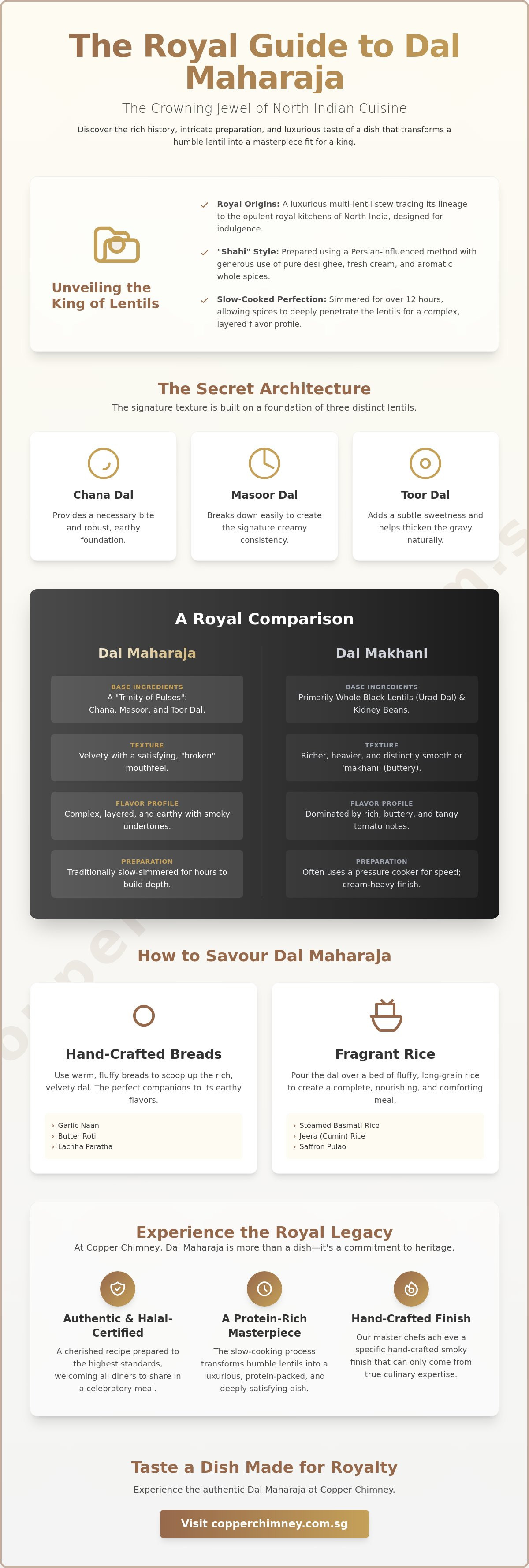
Dal Maharaja vs. Dal Makhani: A Royal Comparison
Roughly 65% of first-time diners at our Syed Alwi restaurant often mistake one creamy lentil dish for another. It's a common slip in Singapore's vibrant Indian food scene, where "creamy" is frequently used as a catch-all descriptor. While Dal Makhani is undoubtedly the famous heavyweight of North Indian cuisine, the dal maharaja offers a distinct, multi-layered experience that caters to a different part of the palate. One is a masterclass in silky, dairy-led richness, while the other is a celebration of varied textures and bright spice profiles.
Visual and Textural Differentiators
You'll notice the contrast the moment the copper bowls arrive at your table. Dal Makhani is famous for its deep burgundy, almost black hue, a result of slow-cooking whole black urad dal for precisely 16 hours. It possesses a glossy, uniform finish that's nearly liquid velvet. In contrast, the dal maharaja presents a stunning golden-amber glow. Rather than a single pulse, it utilizes a blend of lentils that maintains a slightly grainy, rustic texture. You can see the individual character of the pulses, providing a satisfying mouthfeel that feels substantial and home-style. This textural variety makes it a fantastic companion to our Butter Chicken, as the rustic lentils cut through the silkiness of the makhani-style gravy perfectly.
Spice Levels and Creaminess
The culinary DNA of these two dishes diverges sharply when we look at how they achieve their body. Dal Makhani relies heavily on dairy; it's defined by the generous addition of butter and cream which mellows out the heat. The Maharaja version is more athletic in its composition. It often relies on the natural starches of the mixed pulses to create thickness, using dairy as an accent rather than a foundation. This allows the spices to sing much louder. You'll find a more pronounced kick in a Maharaja, often featuring three or four types of dried chillies and a punchier ginger-garlic base.
Choosing between them depends entirely on the mood of your meal. If you've ordered a selection of fiery kebabs and want a cooling, indulgent side to balance the heat, Dal Makhani is your best bet. However, if you're looking for a dish that can stand as the spicy centrepiece of your dinner, the Maharaja wins every time. It's the choice for those who prefer a "bright" flavour profile over a "heavy" one. At Copper Chimney, we ensure both are prepared with the same award-winning attention to detail, though the Maharaja remains the preferred choice for those seeking a complex, spiced journey through India's diverse pulse heritage.
How to Savour Dal Maharaja: Pairings and Tasting Notes
To truly appreciate dal maharaja, you must first pause to observe its presentation. When the heavy bowl arrives at your table, the first thing you'll notice is the deep, mahogany hue of the lentils, broken only by a swirl of fresh cream. Let the rising steam carry the scent of slow-cooked spices and faint charcoal smoke to you. The temperature should be piping hot, keeping the butter in a silky, fluid state. A seasoned diner looks for a specific spice balance where the warmth of the garam masala supports, rather than smothers, the natural earthiness of the pulses. This "Connoisseur’s First Bite" should be a revelation of texture, creamy on the tongue but with the distinct, firm structure of the whole black lentils still intact.
The Perfect Bread Companion
The thick, velvety consistency of dal maharaja demands a sturdy vessel. A basket of Garlic Naan, pulled fresh from our tandoor, offers the ultimate pairing. The charred, crisp edges of the bread provide a vital textural counterpoint to the soft lentils, while the pungent garlic butter enhances the dish's underlying richness. If you prefer something more rustic and wholesome, the Tandoori Roti is an excellent choice. Its wheat-forward profile and slightly chewy texture allow the complex spices of the lentils to take centre stage. The contrast between the yielding pulses and the crunch of freshly baked bread is what makes every bite so satisfying.
Rice and Side Dish Synergies
While bread is a classic choice, a bed of fluffy Jeera Rice creates a different kind of magic. The aromatic cumin seeds in the rice echo the tempered spices found in the dal’s tadka, creating a harmonious, earthy profile. For those looking to create a balanced feast, we suggest pairing these elements with a robust meat dish like Mutton Rogan Josh. The tender lamb and its thin, spicy gravy contrast beautifully with the creamy, dense nature of the lentils.
To keep your palate sharp throughout the meal, keep a bowl of cool Raita nearby. A quick spoonful of seasoned yoghurt between bites of spiced pulses resets your taste buds, ensuring the last spoonful of dal maharaja is as impactful as the first. Don't overlook the final garnishes either. The citrusy notes of fresh coriander and the sharp, warming bite of ginger juliennes aren't just decorative; they cut through the dairy, adding layers of brightness to the finish. Each element works in tandem to celebrate the heritage of this royal dish.
Experience these exquisite pairings for yourself by making a reservation at our Syed Alwi location today.
Experience the Royal Legacy at Copper Chimney
Copper Chimney serves as a dedicated custodian of North Indian culinary heritage right here in the heart of Singapore. Since we first welcomed guests in 2012, our mission has been to provide an authentic taste of home through time-honoured recipes and uncompromising quality. Our dal maharaja is perhaps the finest example of this commitment. We don't believe in shortcuts. Instead, our chefs slow-cook the lentils for hours on a gentle flame, allowing the smoky aromatics to permeate every grain. This patient process results in a dish that is rich, layered, and deeply comforting, a true reflection of the royal kitchens from which it originated.
Our reputation as an award-winning destination isn't just about the food; it's about the trust we've built with the local community over the last 12 years. We've been recognised consistently for our culinary excellence, ensuring that every visit feels like a return to a familiar, welcoming table. Whether you're a long-time fan or a curious newcomer, the depth of flavour in our signature dishes offers a sensory journey that stays with you long after the meal ends.
A Halal-Certified Feast for All
Inclusivity sits at the very centre of our kitchen philosophy. Being a Halal-certified establishment means every resident and visitor in Singapore can partake in this royal culinary journey without hesitation. We source our pulses and hand-picked spices with meticulous care to ensure every bowl of dal maharaja tastes as consistent today as it did when we first launched over a decade ago. If you're looking for a warm, professional space to enjoy your next meal, we invite you to visit our various locations across the island.
Authentic spices sourced directly for maximum potency.
Strict Halal certification for peace of mind.
A warm, sophisticated atmosphere suitable for families and business lunches.
Bringing the Royalty to Your Event
The rich, creamy nature of our signature dal makes it a standout choice for our Indian catering services. Unlike lighter dishes that might lose their appeal on a buffet line, the dal maharaja actually improves as it rests, maintaining its warmth and luxurious mouthfeel throughout your entire event. It's a reliable crowd-pleaser that brings a touch of regal elegance to any table. Whether you're hosting a corporate gala or a private family celebration, you can book our specialised team to handle the details, or simply place an order online to enjoy the Copper Chimney experience in the comfort of your own home.
Experience the Reign of Flavour at Your Table
Finding genuine comfort in a bowl of lentils requires a delicate balance of patience and premium ingredients. You've seen how the meticulous slow-cooking process transforms humble black lentils into a creamy, regal masterpiece that holds its own against the more common Dal Makhani. This dish represents a rich legacy of North Indian excellence that Copper Chimney has refined since 2012. As a Halal-certified destination, we've spent years perfecting award-winning recipes that are now a staple for discerning diners and corporate event planners across Singapore. When you finally dip a piece of crisp, tandoor-fired naan into our signature dal maharaja, the aromatic depth and velvety texture tell a story of tradition. It's a sensory journey that bridges the gap between high-end culinary craft and the simple, nostalgic warmth of a home-cooked meal. We invite you to pull up a chair and taste the heritage we've been building for over a decade.
We look forward to sharing our kitchen's greatest treasures with you soon.
Frequently Asked Questions
What is the main difference between Dal Maharaja and Dal Tadka?
The primary distinction lies in the texture and the base lentils used; Dal Maharaja is a rich, slow-cooked delicacy made with whole black lentils and kidney beans, whereas Dal Tadka typically features split yellow lentils tempered with spices. While Dal Tadka is a light, everyday staple, our version is simmered for over 12 hours to achieve a velvety consistency that defines North Indian luxury. This extended cooking process creates a depth of flavour that sets it apart from the quick, fiery temper of a traditional tadka.
Is Dal Maharaja always vegetarian and Halal?
Yes, dal maharaja is a strictly vegetarian dish that remains a cornerstone of plant-based Indian cuisine. At Copper Chimney, we ensure all our offerings meet the highest standards, as we've maintained our Halal certification since our inception in Singapore. This commitment allows our diverse community to enjoy this aromatic, protein-rich dish with absolute peace of mind. It's a nourishing choice that aligns perfectly with both dietary preferences and religious requirements in our vibrant city.
Which lentils are used in an authentic Dal Maharaja recipe?
Authentic recipes rely on a specific blend of whole black lentils, known as Urad Dal, and dark red kidney beans, or Rajma. We source these high-quality legumes to ensure the dish retains its signature earthy undertones and robust body. The ratio is crucial; typically, 80 percent black lentils are paired with 20 percent kidney beans to create the perfect textural balance. These ingredients are soaked overnight for 8 hours before they begin their long journey in our kitchen.
Is Dal Maharaja spicy compared to other Indian lentil dishes?
Dal maharaja is known for its mild, buttery flavour profile rather than intense heat, making it accessible to those who prefer a gentler spice level. While dishes like Dal Fry might carry a sharper chilli kick, this "King of Dals" focuses on aromatic complexity through spices like cardamom and cinnamon. It's the ideal comfort food for Singaporeans who appreciate a rich, savoury experience that doesn't overwhelm the palate with capsaicin. The cream and butter mellow out the warmth.
Can Dal Maharaja be made vegan?
While the traditional recipe is famous for its use of dairy, the dish can be adapted for a vegan diet by substituting butter and cream with coconut milk or plant-based oils. Many modern kitchens in Singapore now offer these alternatives to cater to the 7 percent of the population that identifies as vegetarian or vegan. At Copper Chimney, we respect these dietary shifts, though the classic version remains a favourite for those seeking that authentic, nostalgic richness and creamy mouthfeel.
What are the best side dishes to serve with Dal Maharaja?
The velvety texture of this dish pairs exquisitely with leavened breads like Garlic Naan or a crisp Tandoori Roti fresh from the oven. For those who prefer rice, a fragrant bowl of Jeera Rice provides a light, aromatic base that doesn't compete with the dal's richness. We often see guests pairing it with our signature Hakka noodles for a unique Chindian twist. Adding a side of pickled onions or a cooling raita completes the sensory journey perfectly.
How long does it take to cook Dal Maharaja traditionally?
A truly authentic preparation requires a slow-cooking process that spans between 12 and 24 hours to achieve its legendary smoothness. This patience-tested method allows the lentils to break down naturally, creating a thick, creamy sauce without the need for excessive thickeners. Our chefs follow this time-honoured tradition, simmering the dal over a low flame to infuse every grain with the smoky essence of our hand-crafted spice blends. It's a labour of love that can't be rushed.
Why is it called "Maharaja" dal?
The name "Maharaja" translates to "Great King," a title that reflects the dish's regal history and the opulent ingredients used in its preparation. Traditionally served at royal banquets in North India, this dal was designed to impress with its lavish use of butter, cream, and rare spices. It represents the pinnacle of lentil-based cooking, standing as a prestigious symbol of hospitality. When you enjoy this dish at our tables, you're participating in a culinary legacy that's nourished royalty.


Comments