
The Soul of the Spice: A Connoisseur’s Guide to the Little India Restaurant Scene in 2026

If you think you've tasted the real Singapore without losing yourself in the aromatic fog of a Little India restaurant, you're merely skimming the surface of a much deeper, spicier truth. You know the sensation well. You step onto Serangoon Road in 2026, and the air hits you like a physical weight, thick with the scent of toasted cumin and the hum of a thousand hungry souls. Yet, it's easy to feel paralysed by the sheer noise of it all. You're likely tired of the tourist traps charging S$25 for a mediocre korma; you're probably confused by the blurred lines between North Indian heat and South Indian soul.
I'm here to guide you through this beautiful, gritty labyrinth to find the authentic heart of the plate. This journey will give you a visceral understanding of these historic streets, from the smoky depths of the Tandoor to the high-heat theatre of Chindian fusion. We'll identify the must-order dishes that define a connoisseur’s palate. By the end, you'll have a direct line to Copper Chimney, our award-winning, Halal-certified destination that has been perfecting the art of the sizzle for years. It's time to stop wandering and start eating with purpose.
Key Takeaways
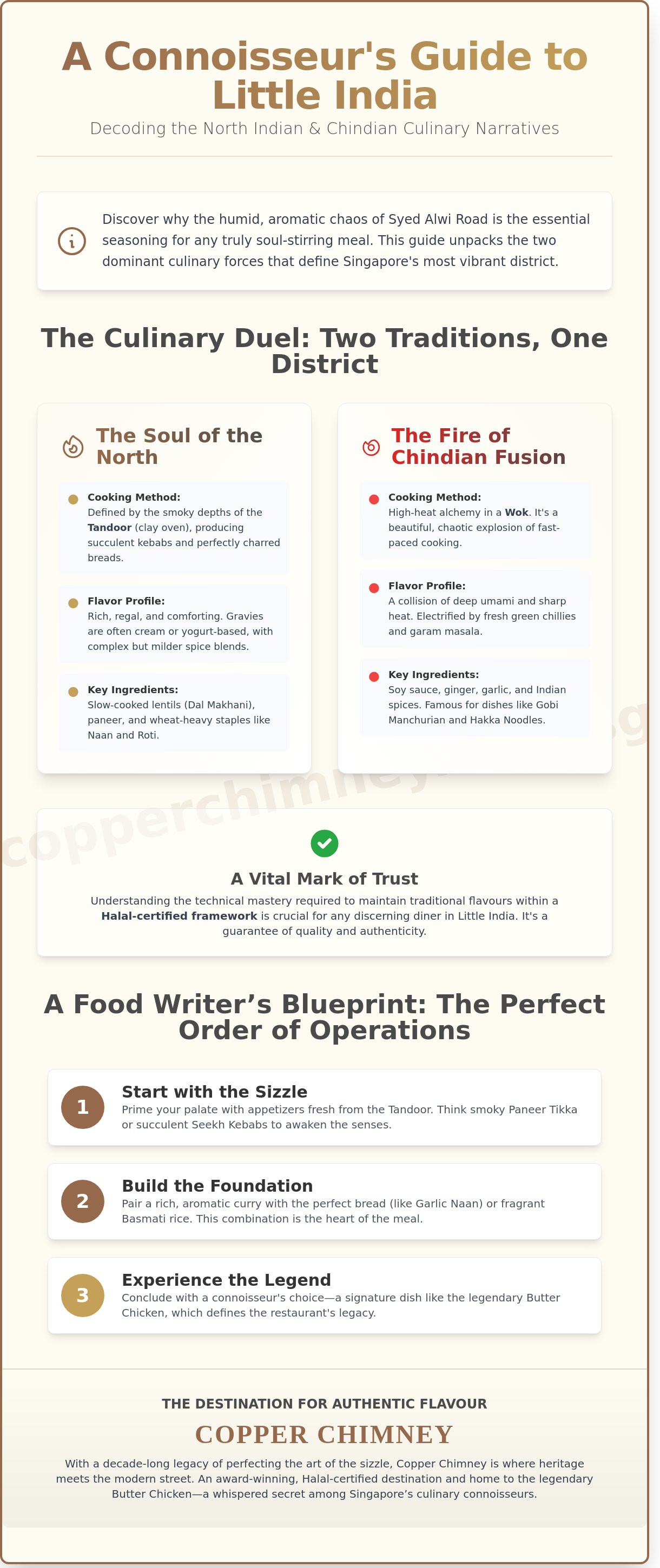
Discover why the humid, aromatic chaos of Syed Alwi Road is the essential seasoning for any truly soul-stirring meal in this historic district.
Unpack the high-heat alchemy of Chindian cuisine and learn why slow-cooked lentils and clay-oven techniques define the North Indian culinary narrative.
Understand the technical mastery required to maintain traditional flavours within a Halal-certified framework, a vital trust marker for any discerning little india restaurant patron.
Master the "Order of Operations" to structure your meal like a seasoned food writer, ensuring your palate is perfectly primed for maximum impact.
Explore the decade-long legacy of Copper Chimney and find out why their legendary Butter Chicken remains a whispered secret among Singapore’s culinary connoisseurs.
Table of Contents The Sensory Chaos of Little India: Why We Keep Coming Back for More Beyond the Banana Leaf: Decoding the North Indian and Chindian Narrative The Halal Factor and the Art of the Tandoor A Food Writer’s Blueprint for Navigating the Menu Copper Chimney: Where Heritage Meets the Sizzle of the Modern Street
The Sensory Chaos of Little India: Why We Keep Coming Back for More
To walk down Syed Alwi Road at 7:00 PM is to surrender to a beautiful, humid madness. The air sits heavy at 31 degrees Celsius, thick with a humidity that carries the weight of a thousand kitchens. It's a visceral slap to the face that tells you you've arrived. This isn't the sanitized, air-conditioned Singapore of the guidebooks; it's something older and more honest. The "cacophony" of honking cars, rhythmic cleaver thuds, and Tamil pop music isn't noise. It's the essential seasoning for every meal served here. Without the grit of the street, the saffron in your rice wouldn't taste nearly as sweet.
Since the mid-1800s, this precinct has transformed from a swampy cattle trading post into the city's beating culinary heart. Understanding the history and culture of Little India reveals a neighbourhood that has consistently reinvented itself while keeping its soul intact. By 2026, the area has matured into a sophisticated landscape where ancient techniques meet modern appetites. However, the sheer volume of choices can be paralyzing. Finding the right Little India restaurant among hundreds of options requires more than just a search engine; it requires a curated blueprint to navigate the smoke and the spice.
To better understand this concept, watch this helpful video:
The Unapologetic Vibe of the Streets
The scent profile of the neighbourhood is a complex masterpiece. One moment you're enveloped by the delicate, floral sweetness of fresh jasmine garlands sold on the corner; the next, the sharp, smoky aroma of charred tandoori meats takes over. The rhythm never stops. From the first pour of pulled ginger tea at 6:00 AM to the late-night biryani runs at 2:00 AM, the energy is constant. We embrace the "gritty" nature of these alleys because, in this enclave, grit translates to authenticity. It’s the sign of a kitchen that prioritises the fire of the tandoor over the polish of the floorboards.
The Global Draw of Local Spices
Little India remains one of the few truly democratic spaces in Singapore. On any given Tuesday, you'll see tech CEOs in tailored shirts sitting on plastic stools next to backpackers, both equally obsessed with a S$7.00 plate of Chindian noodles. This little india restaurant scene draws a national audience because it offers a narrative you can't find elsewhere. Whether it's the rich, cream-based gravies of the North or the fiery, soy-infused kick of a specialized Hakka dish, the flavours here bridge cultures. We are setting the stage for a culinary journey that celebrates both the traditional tandoor and the bold evolution of Indian-Chinese fusion.
Beyond the Banana Leaf: Decoding the North Indian and Chindian Narrative
To truly understand the soul of a Little India restaurant in 2026, you have to look past the ubiquitous banana leaf. Most diners arrive with the mistaken belief that Indian food is a monolith, a single category defined solely by heat and turmeric. That's a myth. The reality is a complex map of geography and history. In Singapore, the narrative is split between the agrarian roots of the South and the regal, heavy-hitting flavours of the North, with a wild, high-heat detour through the streets of Kolkata.
This culinary landscape isn't just about tradition; it's about evolution. While the South offers a lighter, rice-based fire, the North provides a rich, wheat-heavy embrace that feels like a warm coat on a rainy day. This distinction is vital for any connoisseur. Understanding the history of Little India shows us how these regional specialities found a home here, evolving from 19th-century migrant kitchens into the sophisticated dining rooms of today. Today, a meal that costs you S$35 in a refined setting carries the weight of two centuries of migration and adaptation.
The Fire of the Wok: What is Chindian Food?
Chindian food is a beautiful, chaotic alchemy. It's not fusion in the modern, forced sense of the word. It's a century-old survival story born in the Tangra district of Kolkata, where the Chinese community began using Indian spices to suit local palates. The result is a high-heat explosion. You get the deep, dark umami punch of soy sauce and ginger, but it's electrified by the sharp, stinging heat of fresh green chillies and garam masala. The Gobi Manchurian is the undisputed gateway drug here. It’s cauliflower transformed into something crisp, saucy, and entirely addictive, proving that the wok can be just as Indian as the kadai.
The Soul of the North: Tandoors and Rich Gravies
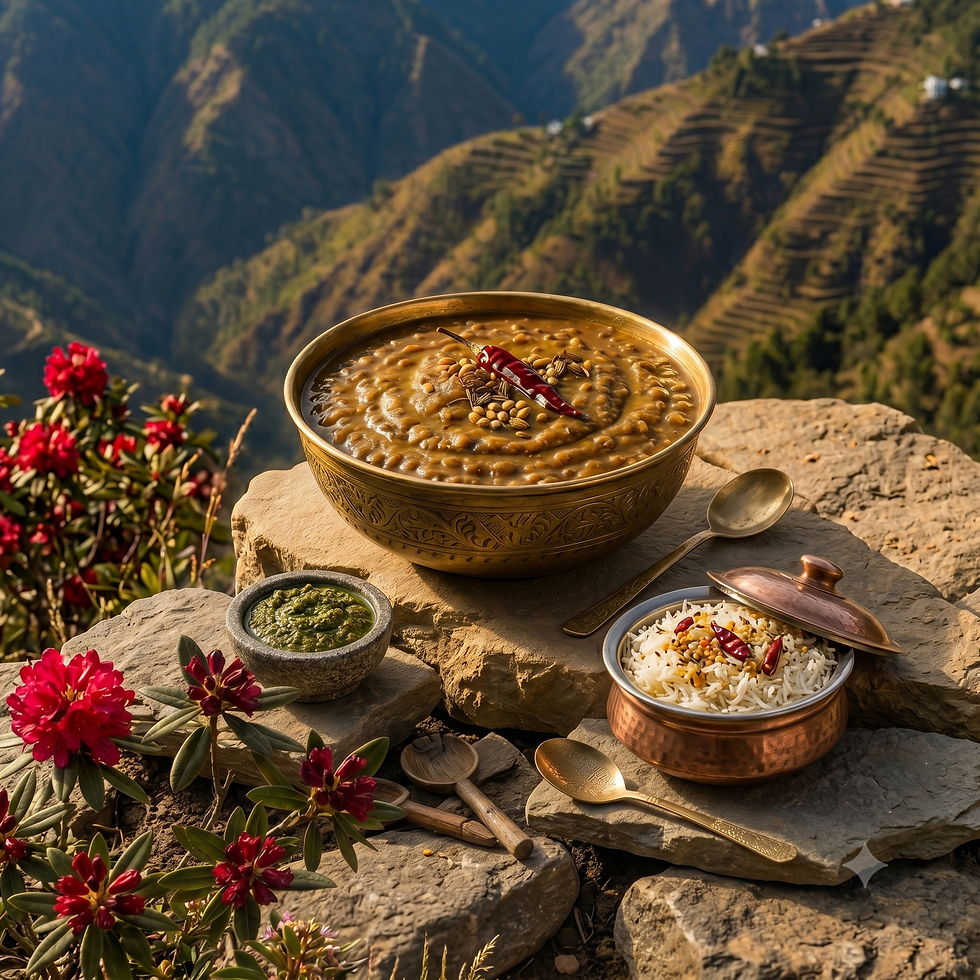
The North is the land of the clay oven and the slow burn. The Tandoor isn't just a piece of equipment; it's a living thing that requires a master’s touch. To achieve that perfect, jagged char on Tandoori chicken, you need a dry heat that often exceeds 480 degrees Celsius. It’s a violent environment that produces tender, smoky results. Then there’s the Dal Makhani. At an award-winning Little India restaurant, slow-cooking these lentils for 24 hours isn't a choice; it's a spiritual act. You don't just boil them; you coax them into a buttery, creamy submission over a full day. If you're looking for that specific smoky depth, you might want to explore our signature Tandoor menu to see how we honour these traditions. It's a world away from the thin, spicy rasams of the South, offering a velvet-like texture that lingers on the tongue long after the meal is over.
The Halal Factor and the Art of the Tandoor
The air in Little India smells of rain, exhaust, and ancient secrets. Stepping into a premier Little India restaurant like Copper Chimney, you're greeted by the visceral heat of the kitchen. Here, Halal certification isn't a mere sticker on the window; it's a sacred trust that ensures every guest feels invited to the table. In a city where over 15 percent of the population follows Halal dietary laws, the MUIS seal, established in 1978, represents a bridge of inclusivity across a diverse palate. Some critics argue that removing certain traditional fats or ingredients compromises the depth of a North Indian curry. They're wrong. A seasoned chef uses the absence of shortcuts to elevate the craft, relying on the chemistry of 24-hour marinades and the raw power of the flame to coax out layers of flavour. It's a technical tightrope walk where smoke and spice must do the heavy lifting without the crutch of non-Halal additives.
The Sanctity of the Halal Kitchen
The rigour of maintaining a Halal kitchen in this vibrant culinary hub requires obsessive attention to detail that goes far beyond simple ingredient swaps. We source premium chilled mutton and Grade A long-grain basmati to ensure every dish carries the weight of tradition. This commitment to quality acts as a communal bridge; it allows a Buddhist businessman, a Malay family, and a curious traveller to share the same aromatic experience. Since our award-winning journey began, we've treated sourcing as a religious devotion, ensuring that our Halal North Indian offerings remain a benchmark for the little india restaurant scene.
Mastering the Heat: The Tandoori Technique
The Tandoor is a temperamental beast, a clay oven reaching 480 degrees Celsius that demands absolute respect from the chef. A perfect Garlic Naan must display those charred "leopard spots," the smoky signature of hand-crafted dough meeting intense, dry heat. This blistering environment seals in the juices of our sizzling kebabs, creating a world-weary char that hides a tender, spice-infused interior. Success in the Tandoor depends on three specific elements:
The Marinade: A thick yogurt base that tenderises the meat while holding the spice profile intact.
The Timing: Seconds mean the difference between a succulent tikka and a dry disappointment.
The Spice Dialogue: Using Kashmiri chilli and hand-ground garam masala to create a conversation between the meat and the smoke.
There's no compromise on taste here. The heat of the Tandoor provides a depth of flavour that no modern convection oven could ever replicate, proving that authentic tradition and Halal standards are a perfect, sizzling match.
A Food Writer’s Blueprint for Navigating the Menu
Walking into a Little India restaurant in 2026 requires more than an appetite; it demands a strategy. You don't just dive into the mains. The "Order of Operations" is sacred. You begin with the "Chindian" offerings, those glorious, high-heat hybrids born in the streets of Kolkata and perfected in Singapore. Never skip the Gobi Manchurian or the Schezwan-infused starters. They wake up the palate with a punch of soy and chilli that prepares you for the heavier spices ahead. These dishes represent a cultural bridge, offering a smoky, umami-rich introduction to the meal.
The art of the pairing is where the connoisseur separates themselves from the casual diner. Bread selection is a science. A rich, buttery gravy like a Daal Makhani needs the structural integrity of a garlic naan, while a thinner, more aromatic curry finds its soulmate in a crisp Tandoori Roti. Between bites, lean on the lassi. It isn't just a drink; it's a cooling agent for your tongue. The mint chutney serves a similar purpose, cutting through the fat of a lamb kebab with sharp, herbal acidity that resets your taste buds for the next course.
The Essential "Must-Try" List for 2026
Butter Chicken remains the litmus test for any North Indian kitchen. A proper version uses tomatoes ripened to a specific sweetness and hand-crafted butter to achieve that velvety texture. For a masterclass in heat, the Szechwan Fried Rice is essential; every grain of rice is coated in a smoky, spicy sauce that hits the back of the throat just right. Finally, the Lucknowi Mutton Biryani offers a fragrant, elegant alternative to the heavier street versions, featuring long-grain rice and tender meat infused with saffron.
Dining Like a Local: Etiquette and Insights
There's a tactile joy in eating with your fingers that a fork simply cannot replicate. It's a sensory connection to the food. Wash your hands thoroughly at the communal sinks before you sit. To avoid the peak-hour rush, arrive before 6:45 PM or after 9:15 PM. This is when the staff have time to share the stories behind the recipes. For the solo culinary scout, a "Bento Box" is the savvy choice. These curated sets usually cost between S$16 and S$24, providing a balanced sample of the menu's greatest hits without the need for a large group.
Looking for an award-winning experience that blends tradition with modern flair?
and savour the authentic flavours of our Halal-certified kitchen.
Copper Chimney: Where Heritage Meets the Sizzle of the Modern Street
Walking through the neon-drenched corridors of Race Course Road, you quickly realise that Copper Chimney isn't just another stop on a food tour. Since 2012, this establishment has acted as the quiet architect of the Halal Chindian movement in Singapore. It's a place where the breath of the wok meets the primal heat of the tandoor, creating a culinary language that speaks to the soul. For over twelve years, they've refined a craft that balances the fiery intensity of Chinese cooking techniques with the deep, aromatic spices of North India. This isn't just about fusion; it's about a decade of perfecting a specific, soulful identity that resonates with the city's diverse palate.
The Butter Chicken here is something of a legend, whispered about in connoisseur circles as the definitive version of the dish. It avoids the neon-orange clichés found elsewhere. Instead, it offers a complex, velvet-textured gravy that feels like a warm embrace on a rainy Singapore afternoon. It's a reminder that even in a fast-paced metropolis, some things require the slow, steady hand of tradition. Copper Chimney stands out as the definitive Little India restaurant for those who demand Halal-certified excellence without sacrificing an ounce of authentic, gritty flavour.
The Signature Dishes that Define Us
The Lamb Shank Biryani is a bone-in masterpiece that demands your undivided attention. The meat is slow-cooked until it's barely clinging to the bone, infused with long-grain basmati rice that has soaked up every drop of marrow and spice. It's a heavy, honest plate of food. Then there's the Chilli Chicken, the quintessential "Chindian" staple. It's a rite of passage for any regular, offering a sharp, spicy kick that's tempered by the smoky char of a high-heat wok. If you're looking for comfort, the Dal Maharaja is a slow-burn meditation on patience. This black lentil stew is simmered for over 24 hours, resulting in a creamy, earthy depth that serves as the ultimate soul food.
Bringing the Little India Soul to Your Event
The transition from a beloved Little India restaurant to a national catering powerhouse wasn't an accident. It was a response to a demand for authenticity in spaces that usually settle for the bland. Copper Chimney now services over 500 corporate events annually, translating the restaurant's signature heat into large-scale buffets that don't lose their character. The real magic happens at their Live Stations. Bringing a glowing tandoor to a corporate function or a wedding changes the atmosphere entirely. Watching a chef slap fresh dough against the clay walls of the oven provides a piece of street-side theatre that connects people to the source of their food. It's about bringing the sizzle of the street to the boardroom. Experience the authentic sizzle of Copper Chimney today and discover how food remains the ultimate human connector in our chaotic, modern world.
Your Next Great Culinary Encounter
Little India doesn't just feed you; it demands your attention and rewards your curiosity. It's a sensory riot where the air stays thick with toasted cumin and the promise of something transformative. We've seen how the narrative has shifted beyond the basics, moving into the bold, sizzling world of Chindian fusion and the disciplined heat of a Halal-certified Tandoor. Finding the perfect Little India restaurant in 2026 requires more than a map; it requires an appetite for heritage. Copper Chimney has spent over 12 years as a custodian of these flavours, bridging the gap between nostalgic tradition and modern street-food energy. Their award-winning kitchen remains a sanctuary for those who crave the punchy, wok-charred soul of Indian-Chinese cuisine. It's a legacy built on more than 4,380 days of culinary excellence, ensuring every guest finds a seat at a table where history is served hot. The streets are waiting, and the best stories are always told over a shared plate of sizzling kebabs.
Book your table at Copper Chimney for an authentic Halal feast and discover why this corner of Singapore continues to capture the world's imagination. Pull up a chair and let the feast begin.
Frequently Asked Questions
Is food in Little India generally Halal-certified?
Many establishments in Little India hold Halal certification to serve Singapore’s diverse local community. Copper Chimney has maintained its Halal certification for years, ensuring our tandoori grills and aromatic curries are accessible to everyone. In a district where 40 percent of visitors actively seek Halal options, we make sure the soul of our kitchen remains inclusive. You will find the MUIS certificate proudly displayed near the entrance of most compliant eateries.
What is the difference between North Indian and South Indian food?
North Indian cuisine focuses on wheat breads and thick, cream based gravies, while South Indian food celebrates rice, lentils, and coconut. When you step into a Little India restaurant, you'll notice the North uses the clay tandoor for smoky naan and kebabs. The South offers the crisp snap of a paper thin dosa or the fermented tang of idli. It is a geographical divide written in spice and texture.
What are the must-try dishes for a first-timer in Little India?
Start your journey with a plate of sizzling Chicken Kalmi Kebab or a classic, fragrant Mutton Biryani. For those exploring a little india restaurant for the first time, the Butter Chicken paired with garlic naan offers a gentle introduction to the tandoor's magic. If you want a kick, the Chilli Chicken showcases the fiery spirit of our specialised Chindian fusion. These dishes represent the core of our culinary identity.
Is Little India safe for tourists to eat at night?
Little India is remarkably safe for late night dining, as Singapore's crime rate remains one of the lowest globally at 605 cases per 100,000 people in 2023. The streets stay vibrant and well lit well past midnight, with families and travellers sharing tables under the neon glow. You can walk the back alleys of Race Course Road at 11 PM without a second thought. The only danger is the addiction to the spice.
How much should I expect to spend at a Little India restaurant?
Expect to spend between S$15 and S$45 per person for a satisfying meal in this district. A casual vegetarian thali might set you back S$12, while a full spread at an award winning little india restaurant like Copper Chimney averages around S$35 per head. Prices have remained stable despite global shifts, making it one of the most value driven gourmet experiences in the city today.
Does Copper Chimney offer vegetarian options?
We offer an extensive selection of vegetarian dishes that capture the same aromatic intensity as our meat offerings. From the creamy depths of our Dal Maharaja to the hand crafted Paneer Tikka, roughly 45 percent of our menu is dedicated to plant based excellence. These aren't afterthoughts; they're heritage recipes that have earned us accolades across Singapore's competitive food scene for over a decade.
Can I get Little India food delivered nationally in Singapore?
You can have the flavours of Little India delivered to any corner of mainland Singapore through our direct islandwide delivery service. Whether you're in Jurong or Pasir Ris, our hand crafted meals arrive at your door within 45 to 60 minutes. We use specialised packaging to ensure the naan stays soft and the kebabs remain sizzling during their journey across the island. Quality doesn't stop at the restaurant door.
What exactly is "Chindian" cuisine?
Chindian cuisine is the bold, soulful marriage of Chinese cooking techniques and Indian spices, born in the streets of Kolkata. It's where the wok meets the masala, resulting in legendary dishes like Szechuan Triple Rice and Manchurian gravy. At Copper Chimney, we've mastered this fusion since 2012, using the high heat of the flame to create a flavour profile that is uniquely addictive, spicy, and deeply nostalgic for our guests.

Comments