
The Connoisseur’s Guide to the Perfect Garlic Naan: History, Craft, and Pairings

The difference between a mediocre dinner and a culinary masterpiece often rests on a single millimetre of charred, bubbly dough. We've all experienced the crushing disappointment of a garlic naan that arrives cold, rubbery, or lacking that essential pungent kick. At Copper Chimney, our award-winning chefs have spent over 12 years perfecting the delicate balance of heat and hydration. This ensures every bite is a sensory revelation that transports you straight to the heart of Old Delhi.
You likely agree that nothing compares to the aroma of fresh dough meeting a 480-degree Celsius clay oven; yet finding that authentic texture outside of a professional kitchen remains a challenge. We'll share the secrets behind the world's most beloved Indian flatbread, from the intense heat of the tandoor to the precise art of the perfect garlic infusion. This journey covers the rich history of this staple, teaches you how to identify a truly high-quality bake, and reveals the specific North Indian pairings that elevate your dining experience from simple to sublime.
Key Takeaways
Understand the sensory science behind the Maillard reaction and how it creates that unmistakable, aromatic charred finish.
Learn why the addition of yogurt and specific leavening techniques are the secrets to achieving a signature, pillowy stretch.
Master the art of pairing the robust flavours of garlic naan with rich, velvety curries for a perfectly balanced meal.
Discover the subtle culinary distinctions that set the tandoor-baked classic apart from regional cousins like roti and kulcha.
Explore the heritage of hand-stretched dough and the essential role of the clay tandoor in crafting authentic excellence.
Table of Contents The Sensory Allure: Why Garlic Naan Reigns Supreme The Anatomy of Authenticity: How True Naan is Crafted The Bread Spectrum: Garlic Naan vs. Other Indian Flatbreads The Art of the Pairing: A Connoisseur’s Guide Experience the Tandoor at Copper Chimney
The Sensory Allure: Why Garlic Naan Reigns Supreme
There is something undeniably magnetic about the scent of a fresh garlic naan as it emerges from the intense heat of a clay oven. It's more than just a simple side dish; it's a sophisticated, leavened flatbread enriched with yogurt and topped with a generous lashing of minced garlic and golden ghee. The magic occurs through the Maillard reaction, a complex chemical process where heat transforms the amino acids and reducing sugars in the dough into a fragrant, golden-brown masterpiece. When the dough hits the tandoor walls at temperatures often exceeding 450 degrees Celsius, the garlic loses its raw bite and develops a mellow, nutty sweetness that defines the dish.
This bread carries the weight of a 500-year-old culinary tradition that evokes instant nostalgia for anyone familiar with North Indian dining. To understand its journey, one must look at the history of naan, which evolved from simple Persian origins into the refined staple of the Mughal courts. The historical marriage of pungent alliums and soft, pillowy dough wasn't accidental; it was a deliberate choice by ancient khansamas to pair the medicinal, sharp qualities of garlic with the comforting, neutral base of wheat, creating a balanced sensory experience that has endured for centuries.
To better understand the craft behind this iconic bread, watch this helpful video showing the traditional preparation process:
Texture and Flavour Profiles
The true beauty of a well-crafted bread lies in its structural contrasts. You'll find a charred, crisp exterior that provides a smoky crunch, giving way to an airy, honeycomb interior that's soft to the touch. This creates a multi-layered taste profile when the infusion of garlic is balanced with a sprinkle of fresh coriander. The ghee plays a vital role here, providing a rich, silky mouthfeel that lingers on the palate and softens the intensity of the spices in your main course.
Naan in the Global Culinary Landscape
From the opulent royal courts of the Mughal Empire in the 1500s to the modern, bustling tables of Singapore, this bread has conquered the world. It is no surprise that garlic naan became the most requested Indian bread in international dining, often serving as the benchmark for a restaurant's quality. At Copper Chimney, we take pride in being a custodian of this tradition. Our Halal certification is a crucial marker of trust for our diverse audience, ensuring that our award-winning recipes meet the highest dietary standards. Whether you are visiting our locations or enjoying a meal at home, the heritage of the craft is present in every bite.
The Anatomy of Authenticity: How True Naan is Crafted
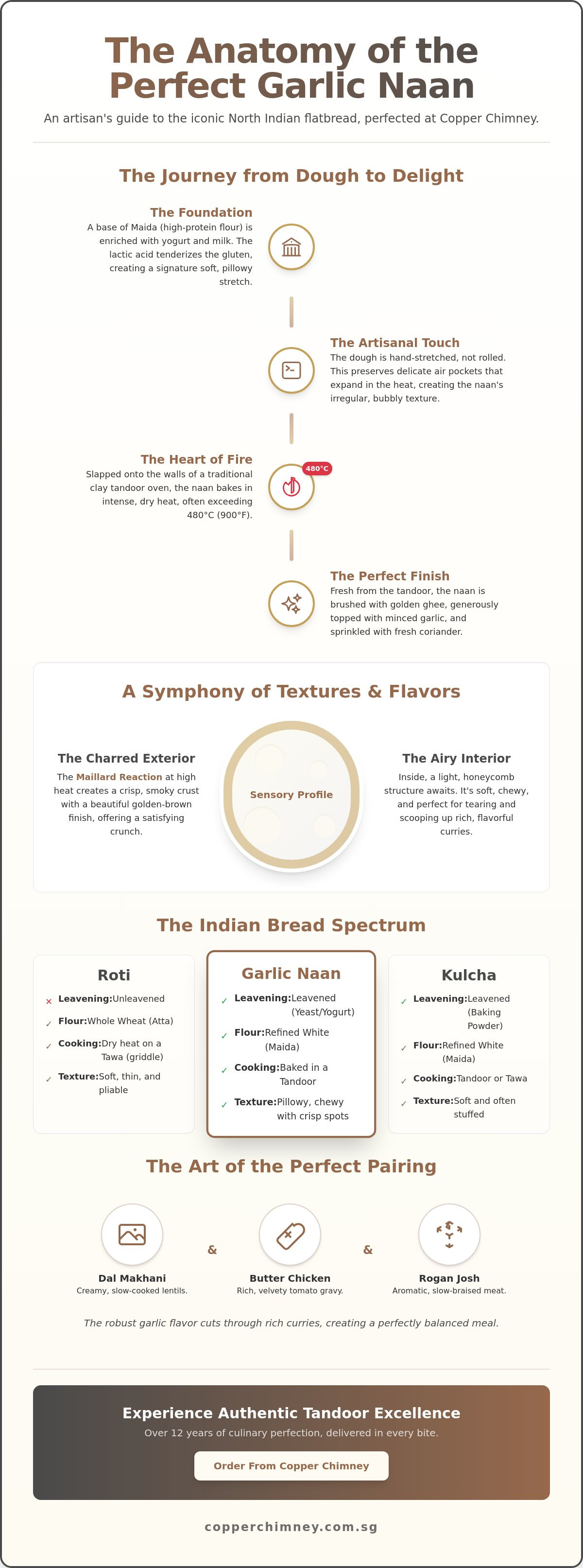
To understand a truly exceptional garlic naan, you have to look beyond the surface. It starts with a dough that's been handled with a specific kind of reverence. We use yogurt and milk as the foundational liquids because they do more than just hydrate the flour. The lactic acid in the yogurt breaks down the gluten just enough to ensure the bread is soft, while providing that iconic, elastic stretch that defines a premium bake. This enrichment process creates a dough that feels alive, responding to the touch of the artisan.
The science of the rise is equally vital. While many modern kitchens rely solely on commercial yeast, the most nuanced breads often involve a slow fermentation process. This allows complex sugars to develop, resulting in a deeper flavour profile that complements the pungent kick of the garlic. Hand-stretching is the final artisanal touch. Unlike a rolling pin, which presses the air out, hand-pulling preserves the delicate gas pockets. These expand rapidly in the heat to create those irregular, beautiful bubbles that provide a contrast of textures in every bite.
The Essential Ingredients
Authentic naan requires Maida, a finely milled, high-protein flour. This provides the structural integrity needed to withstand the intense heat of the oven. We enrich this base with yogurt to create a tender crumb; a texture that feels light yet substantial. Regarding the garlic preparation, the choice is vital. Raw minced garlic provides a sharp, immediate heat, whereas garlic-infused oil, tempered at exactly 180 degrees Celsius, offers a mellow, buttery undertone that lingers on the palate.
The Tandoor Cooking Process
The tandoor is a cylindrical clay oven reaching temperatures between 400 and 480 degrees Celsius. It's a fierce environment. An artisan slaps the hand-stretched dough directly onto the scorching internal walls. This contact provides immediate radiant heat while the centre of the oven circulates hot air through convection. The bread cooks in roughly 60 to 90 seconds, developing the 'char' or leopard spotting that adds a smoky depth. It's this precise choreography of heat and timing that makes a professional garlic naan so distinct from home-baked versions.
If you're eager to experience this artisanal craft firsthand, you can reserve a table at Syed Alwi to see our chefs in action. Watching the dough transform in seconds is a central part of the authentic dining experience.
The Bread Spectrum: Garlic Naan vs. Other Indian Flatbreads
To truly appreciate a basket of garlic naan, you have to understand its place within the vast geography of Indian breads. While the humble Roti and Chapati are the reliable, unleavened workhorses of the daily Indian table, naan occupies a more celebratory space. These everyday wheat breads are typically cooked on a flat tawa or griddle, resulting in a thin, rustic texture that has sustained families for over 2,000 years. Naan, by contrast, relies on leavening agents and the intense, dry heat of a clay Tandoor to achieve its signature pillowy rise.
Then there is the Kulcha, which is frequently mistaken for its cousin. While naan is traditionally made with yeast to create an airy structure, many Kulcha varieties use chemical leavening like baking soda. This results in a crumb that is slightly denser and more bread-like, often serving as a vessel for spiced potato or onion fillings in regions like Amritsar. If you look at the Paratha, the experience shifts entirely to the mechanical. It is a layered, laminated affair, often shallow-fried with generous amounts of ghee to create a flaky, shatter-prone exterior. It offers a crunch that is worlds apart from the soft, elastic pull of a well-made garlic naan.
This specific bread is considered the indulgent choice because it moves beyond the basic function of a utensil. With its glaze of melted butter and a pungent topping of minced garlic, it transforms from a simple accompaniment into a sensory event. At Copper Chimney, we treat this process with the respect it deserves, ensuring each piece is hand-stretched before meeting the 480°C heat of our traditional ovens.
Naan vs. Pita: A Common Misconception
People often conflate these two because of their flat shapes, yet they belong to entirely different culinary lineages. A Mediterranean pita is a lean dough, usually consisting of just flour, water, and yeast, which allows it to puff up and form a hollow pocket. Indian naan is an enriched dough, fortified with yogurt, milk, or sometimes eggs to create a soft, tender crumb. The inclusion of dairy ensures that naan remains plush and pliable rather than forming a dry, thin shell.
Choosing the Right Bread for Your Meal
Selecting the correct bread is an art form that dictates the flow of your dining experience. Consider these pairings for your next visit:
Tandoori Roti: This is the best choice for those seeking a lighter, more wholesome accompaniment to a thick lentil dhal or a dry vegetable stir-fry.
Cheese Garlic Naan: This represents a decadent fusion choice that turns the bread into a standalone star, making it a favourite for our guests over the last 12 years in Singapore.
The Butter Chicken Pairing: A rich, velvety Butter Chicken requires a bread that is sturdy enough to scoop up heavy gravy but absorbent enough to soak up the aromatic tomato cream.
The Art of the Pairing: A Connoisseur’s Guide
Achieving the perfect balance on your plate requires a deep understanding of flavour profiles. The golden rule for any connoisseur is simple: the pungent, aromatic intensity of the garlic naan must complement, rather than overshadow, the richness of the accompanying gravy. When you tear into a warm, charred piece of bread, its purpose is to act as a porous sponge for velvety sauces. Cream-based curries provide the ideal medium for this interaction. The fat in the cream carries the garlic notes across the tongue, softening the sharp edges of the spice while highlighting the bread's buttery finish.
Vegetarian diners often find their ultimate match in the legendary Dal Makhani. Since the recipe for a truly authentic Dal Makhani involves simmering black lentils for at least 24 hours, the resulting depth requires a bright, herbaceous accompaniment. It's a culinary marriage that has stood the test of time across North Indian households. For those who prefer a more contemporary zing, the Chindian connection offers a thrilling alternative. The bold, umami-rich flavours of Chilli Chicken or Gobi Manchurian pair surprisingly well with garlic-laden bread. The charred dough provides a neutral, smoky base that tames the fiery Schezwan heat often found in these fusion dishes.
Top Curry Companions
Butter Chicken: This is the quintessential pairing. The sharp garlic notes cut through the mild sweetness of the tomato-cream base, creating a balanced bite that isn't cloying. It's the standard by which many Singaporean diners judge a North Indian feast.
Mutton Rogan Josh: This Kashmiri classic features a robust, oil-based gravy. A sturdy garlic naan stands up to the intense heat and the tender, gamey flavours of the lamb without losing its structural integrity.
Paneer Tikka Masala: For a texturally diverse experience, the soft cubes of grilled cheese and the crunchy bits of toasted garlic on the bread create a satisfying contrast in every mouthful.
Beyond the Main Course
A connoisseur doesn't stop at curries. Fresh mint chutney or a cooling cucumber raita can transform a simple piece of naan into a sophisticated starter. We've also seen the rise of the 'Naan Taco' trend in global food hubs like London and New York, where traditional breads are folded around fusion fillings like pulled lamb or pickled onions. In Singapore's vibrant food scene, this versatile bread remains a cornerstone of excellence. It's the essential component of any Halal catering spread, ensuring that every guest at a corporate or family event experiences the authentic, award-winning taste of the Tandoor.
Ready to experience these pairings for yourself? Book a table at our Syed Alwi location to enjoy a hand-crafted meal today.
Experience the Tandoor at Copper Chimney
At Copper Chimney, we treat the tandoor as the beating heart of our kitchen. Every piece of garlic naan begins with a bespoke dough that's been kneaded by hand and left to rest until it reaches the ideal elasticity. Our chefs, many of whom bring over 15 years of experience in North Indian culinary arts, stretch the dough with a rhythmic precision that's mesmerising to watch. We bake these at temperatures exceeding 400 degrees Celsius in authentic clay tandoors, ensuring that specific smoky char that defines a true artisan bread.
Since our inception in 2012, we've maintained a steadfast commitment to Halal-certified excellence, earning accolades such as the Singapore Food Masters award for our consistent quality. We don't believe in shortcuts; our recipes are a legacy of award-winning heritage, balanced perfectly to suit the modern palate. This dedication to the craft ensures that the bread you tear into is exactly as it would be in the bustling kitchens of Old Delhi, infused with the rich aroma of burnt garlic and premium ghee.
Dine With Us
Stepping into our restaurant feels like an invitation to a private feast where the senses are immediately engaged. You'll hear the rhythmic slap of dough against the hot clay walls and catch the scent of instant caramelisation as fresh garlic hits the heat. It's a culinary performance that transforms a simple meal into a memorable event. To witness this artistry and enjoy a sizzling, fresh-off-the-wall experience, you can reserve a table at our Syed Alwi location for an authentic North Indian feast.
Bringing the Flavour Home
We've mastered the science of the takeaway journey. We recognise that the greatest challenge for any leavened bread is the transit from our kitchen to your dining table. To combat this, we've developed specialised thermal packaging that traps just enough heat to keep the garlic naan supple without allowing steam to make it soggy. You can order online to enjoy this premium experience from the comfort of your own home.
For those hosting corporate functions or private celebrations, our catering services bring the theatre of the tandoor to you. Our live cooking stations feature professional chefs preparing fresh bread on-site, providing your guests with a hot, aromatic staple that often becomes the star of the evening. Whether it's a small family gathering or a large-scale corporate event, we ensure the standards of our restaurant are mirrored at your venue.
Savour the Timeless Legacy of the Tandoor
Mastering the perfect garlic naan requires more than just flour and flame; it demands a deep respect for centuries of North Indian tradition. We've explored how the intense heat of a traditional clay tandoor creates that signature charred texture and how thoughtful pairings elevate a simple meal into a gourmet experience. Copper Chimney has served as a custodian of these heritage flavours since 2012, ensuring every hand-stretched bread reflects a commitment to culinary authenticity. Our Halal-certified kitchen follows time-honoured baking methods that have earned us recognition as a premier destination for award-winning North Indian Cuisine in Singapore. You'll taste the difference that precision and passion make in every buttery, aromatic bite. Whether you're a long-time enthusiast or a curious newcomer, the journey through India's rich culinary heritage is best experienced through the warmth of a freshly baked loaf. It's time to treat your palate to the excellence you deserve.
We look forward to welcoming you to our table for an unforgettable feast.
Frequently Asked Questions
Is garlic naan traditionally Halal?
Garlic naan is inherently Halal as its core ingredients consist of flour, water, yeast, and fresh garlic. Copper Chimney maintains strict Halal certification to serve Singapore’s diverse community of 5.9 million residents with complete confidence. This ensures every hand-stretched bread meets rigorous dietary standards. Our award-winning kitchen adheres to these protocols, providing peace of mind for every guest who seeks authentic, inclusive flavours.
What is the difference between garlic naan and garlic roti?
The primary difference lies in the leavening agent and the specific type of flour used in the dough. Garlic naan is crafted from leavened maida flour and baked in a clay Tandoor oven at temperatures reaching 480 degrees Celsius. Conversely, garlic roti uses unleavened whole wheat flour and is typically cooked on a flat tawa. This results in the naan being soft and airy, while the roti remains thin.
Can I freeze garlic naan and reheat it later?
You can certainly freeze garlic naan for up to 90 days without compromising its structural integrity or aromatic profile. To preserve the moisture, wrap each piece tightly in foil before placing them in a sealed freezer bag. When you're ready to eat, sprinkle a few drops of water on the bread and warm it in a 180 degree Celsius oven for 5 minutes to restore its fluffiness.
Why is my homemade naan always tough compared to restaurant naan?
Most domestic ovens fail to reach the intense 480 degree Celsius heat of a traditional Tandoor, which is essential for a rapid rise. Restaurant chefs also use a precise ratio of yoghurt to ensure the gluten remains supple. If your garlic naan lacks that pillowy texture, you might be overworking the dough or baking it for too long at a temperature that is simply too low.
Does garlic naan contain egg or dairy?
Traditional recipes frequently incorporate yoghurt, milk, or ghee to achieve a rich, velvety crumb. Some heritage variations might also include a single egg to enhance the elasticity of the dough. While the garlic provides a pungent punch, these dairy components are what create the nostalgic, buttery finish. We recommend checking with your server, as 85 percent of authentic recipes rely on these dairy foundations for texture.
What are the best side dishes to serve with garlic naan?
Rich, gravy-based dishes like Butter Chicken or a robust Dal Makhani are the quintessential companions for this bread. The charred edges of the garlic naan act as a perfect vessel for scooping up thick, aromatic sauces. For a unique twist, try pairing it with our signature Szechuan dishes. These offer a spicy, vibrant contrast to the mellow, roasted garlic notes found in the Tandoor-baked bread.
How many calories are typically in a single piece of garlic naan?
A standard 100-gram piece of garlic naan typically contains between 300 and 350 calories. This figure fluctuates based on the amount of ghee or butter brushed on the surface after it leaves the heat. Approximately 50 percent of these calories come from carbohydrates, while the remaining portion is split between fats and proteins. This makes it a substantial and satisfying accompaniment to any protein-heavy North Indian main course.
Is garlic naan suitable for vegans?
Standard garlic naan is usually not vegan because it contains yoghurt, milk, or a coating of clarified butter. However, about 15 percent of modern kitchens now offer vegan alternatives by substituting dairy with coconut milk or plant-based oils. It is always best to ask your server about the specific ingredients used in their hand-crafted dough. This ensures the meal aligns perfectly with your specific lifestyle and dietary preferences.


Comments